
Alla Horska
1929 — Yalta (Crimea, USSR) | 1970 — Vasylkov, Kyiv region (Ukrainian SSR)
The Ukrainian artist and dissident Alla Horska was a public figure, human rights activist, and prominent representative of the “1960s generation” (shistdesyatnyky). Though she was a painter by training, her work was not limited to easel painting, encompassing works on paper, monumental art (murals and mosaics), and stage design. Together with her husband, Viktor Zaretsky (1925–1990), and a group of like-minded artists, Horska sought to revive the lost monumental art of Ukraine (such as the Boychukists), create Ukrainian national art, and develop a national monumental school of world significance. [1]
The artist’s father, Oleksandr Horsky, was the director of the Yalta Film Studio and, later, the Kyiv Film Studio. From 1943 onward, the family lived in Kyiv, where they befriended the prominent Ukrainian writer and film director Oleksandr Dovzhenko.
At the age of sixteen, Horska entered the Kyiv Art Secondary School. Having completed her education there, in 1948 she enrolled at the Kyiv State Fine Arts Institute (now National Academy of Fine Arts and Architecture), studying in the workshop of Serhiy Hryhoriev (1910–1988) and graduating in 1954. She then worked professionally, took part in exhibitions, and taught painting at the Arts Institute for two years.
In 1952, while still attending the Arts Institute, she married fellow student and artist Viktor Zaretsky. From then on, the two often worked side by side. From 1954 to 1959, they worked together on the theme of miners. Horska went with Zaretsky to the Donbas and talked to miners, even going down into the mines herself. In 1957 she painted Мій Донбас [Miy Donbas, My Donbas], and in 1959 Груповий портрет бригади комуністичної праці П. Польщикова [Hrupovy Portret bryhady komunistychnoii pratsi P. Polshchikova, The Group Portrait of P. Polshchykov’s Communist Labor Brigade]. While working within the mainstream of socialist realist art, Horska nevertheless strove to introduce innovative elements into her work. The paintings she created during this period gave her the opportunity to join the Union of Artists in 1959, giving legal recognition to her professional creative work.
In 1960–61 Horska took up the theme of children, which she treated while painting rural subjects in the village of Hornostaipil, in the Chornobyl district. Painting in tempera on canvas, she set herself difficult artistic tasks, trying to convey the national flavor and peculiarities of Ukrainian folk art in academic painting genres. Her own artistic language was crystallized here. In her paintings Автопортрет з сином [Avtoportret iz synom, Self-Portrait with Son], Прип’ять. Пором [Prypiat. Porom, Prypiat, Ferry], Хліб [Khlib, Bread], and Абетка [Alphabet], the artist sought to go beyond socialist realism, appealing to the magic of concise, decorative expression in folk art. As a result, her works were rejected by exhibition committees and did not get to large union exhibitions, and she could barely make a living as an artist.
In the early 1960s, Horska turned her attention to stage design. Her work in this field was associated with the young director Les Taniuk, with whom she dreamed of creating a new youth theater. From 1961 to 1963, she created five works for the theater: set designs for Taniuk’s performances of Bertolt Brecht’s play Mother Courage and Her Children; Ніж у сонці [Knife in the Sun], based on the poetry of Ivan Drach; Mykola Kulish’s plays Патетична соната [Pathetic Sonata] and Отак загинув Гуска [That’s How Huska Perished]; and Правда і кривда [Truth and Lies], based on the novel by Mykhailo Stelmakh. In her stage work, Horska created her own visual theatrical language, making designs that were specific to the dramatic action but also charged with a dynamic sense of movement and change. All the plays were either banned at the outset or stopped in the process of preparation, so they were never seen by audiences, but Horska’s sketches and Taniuk’s diary have survived.
During this period, in the early 1960s, Horska crafted a series of portraits of her contemporaries: the writer Borys Antonenko-Davydovych, the poets Vasyl Symonenko and Ivan Svitlychnyi, and the literary critic Yevhen Sverstiuk. All her subjects were also persecuted for their dissident activities; some served terms in prison, and others, like Symonenko, were killed by the Soviet regime. Many of them were members of the Suchasnyk [Contemporary] Creative Youth Club in Kyiv, created by Les Taniuk in 1960, to which Horska also belonged. She also painted portraits of legendary historical figures such as the poet Taras Shevchenko and the writer and filmmaker Oleksandr Dovzhenko.
In 1964, on the 150th anniversary of Shevchenko’s birth, Kyiv State University commissioned designs from five artists-—Horska, Opanas Zalyvakha (1925–2007), Halyna Zubchenko (1929–2000), Liudmyla Semykina (1924–2021), and Halyna Sevruk (1929–2022)—for a stained-glass window for the hall on Shevchenko’s imagery. The sketches were approved and the stained-glass window was completed and mounted. On the morning of the opening on March 9, 1964, the artists found the window broken. It is generally accepted that the expressive work, with its geometric generalization of the powerful figures of Shevchenko and a female figure personifying Ukraine, was destroyed by order of the then rector of the university, Ivan Shvets, for not conforming to official ideological and stylistic requirements.
Later that same year, the Suchasnyk Creative Youth Club was liquidated, and the documents, creative works, manuscripts, lists, travel and lecture plans, and private belongings of the club members disappeared from where they were stored in the Zhovtnevyi Palace. Club members told this author that the group was tolerated as a fully official organization with a charter and leadership so that the authorities could monitor and direct all rebellious and outstanding young artists. Then, when the situation eventually got out of hand, the club was not only dissolved but crushed. [1]
One of the reasons for the club’s liquidation in the spring of 1964 was likely its involvement--particularly Horska’s—in the discovery of mass graves in the village of Bykivnia, near Kyiv. The club’s work was organized into “commissions,” such as archaeological, painting, and sculpture, and in 1962–63, a new commission was formed to verify rumors of mass executions by Stalin and to find the places where the victims were buried. It consisted of three members: Les Taniuk, Vasyl Symonenko, and Horska. According to Maya Hryhorieva-Zaretska, Zaretsky’s second wife: “They asked around, and found evidence that pointed to terrible places. That’s how they discovered Lukianivka and Vasylkiv cemeteries, and Bykivnia. The place was just like any other: hills, grass, the ground bending underfoot, goats grazing, and boys playing football in the middle of the forest. Vasyl said, ‘Look what they are playing with.‘ The boys were playing with a small child’s skull that had been shot twice. . . . Alla walked away, burst into tears, and could not speak for a long time." [2]
While deeply engaged in political activities in the 1960s, Horska took decisive steps to free her own painting from the procrustean bed of socialist realism. She turned to symbolism in theme, composition, and color. This is clearly manifested in her numerous sketches for murals, mosaics, and theatrical costumes and scenery. Few of her paintings have survived (or were even created), but they are characterized by a deliberate incompleteness as a technique, which reflects the constant motion of her social and human rights activities and intense creative exploration. The schematically and conventionally outlined, mostly hyperbolic forms of her compositions are filled with decoratively accentuated colors that clearly echo Ukrainian folk art, particularly Horska’s favorite works by Paraska Vlasenko (1900–1960) and Hanna Sobachko-Shostak (1883–1965), who worked with Aleksandra Ekster (1882–1949) and other avant-garde artists. The influence of the works of the Boychukists and Ukrainian avant-garde artists such as Vasyl Yermilov (1894–1968), Oleksandr Bohomazov (1880–1930), Alexandra Ekster, Vadym Meller (1884–1962), and Anatol Petrytsky (1895–1964) is also clearly visible. This influence is boldly, inventively transformed in the dynamic compositions of most of her theater sketches and in her most famous painting, Калинова балада. Портрет Івана Драча [Kalynova balada. Portret Ivana Dracha, Viburnum Ballad: Portrait of Ivan Drach] (1964, National Museum of Literature of Ukraine, Kyiv). In the painting, the poet clasps to his chest a girl with face and hands the bright red of viburnum, a Ukrainian national symbol and subject of a famous folk song. His shirt is glowing with golden yellow sunlight, and the young woman’s red palm lies on his heart, a bloody wound. Behind them, the sun’s outline draws the viewer’s gaze into the cosmic distance, and from its edges emerge eternal images of hope, love, and struggle in the form of classic works of world art, with references to French, Japanese, and ancient Russian iconic painting.
In the later 1960s Horska worked on mosaic murals, although her dissident activities were limiting her possibilities due to her status as a worker rather than an artist, culminating in her expulsion from the Union of Artists in 1968. Along with Zaretsky, Hryhorii Synytsia (1908–1996), Halyna Zubchenko (1929–2000), and Hennadii Marchenko (b. 1932), she worked on the mosaic Прометей [Prometei. Prometheus] on the facade of a Donetsk school in 1966. The same year, she also worked on the mosaic Жінка-птах [Zhinka Ptakh, Woman Bird] in a jewelry store on Ilyich Avenue. The next year, together with her colleagues, she worked on two mosaics in Mariupol: Боривітер [The Boryviter; Conqueror of the Wind] and Дерево життя [Derevo Zhyttia, The Tree of Life] (both destroyed by Russian shelling in 2022). In the winter of 1969–70, Horska collaborated with Zaretsky and Valentin Smirnov (1927–2009), Borys Plaksii (1937–2012), and Anatoly Lymariev (1929–1985) on a mosaic Прапор перемоги [Prapor Peremohy, A Victory Flag] in the Moloda Hvardia (Young Guard) Museum in Krasnodon (now Sorokine), in the Luhansk region. The artists received a State Prize, but neither Horska’s nor Zaretsky’s names were included in the award list.
Repressions had resumed soon after the end of the Khrushchev Thaw, but Horska refused to retreat from public activity: She attended the trial of Yaroslav Hevrych in 1966, a participant in the Suchasnyk Creative Youth Club who was sentenced to prison for restoring the monument to Taras Shevchenko in the village of Sheshory; she opposed the arrest in 1965 of Valentyn Moroz, a historian and dissident who was eventually a long-term political prisoner; and she signed protests by Kyiv residents and distributed self-published books.
One of the most significant events of the period was the “Letter of Protest 139,” a collective letter to the Soviet leaders and government expressing concern about the political trials of 1965–67, violations of laws, and disregard for the basic rights of USSR citizens. The letter was signed by 139 Ukrainian activists, including Horska, Zaretsky, and other Kyiv artists and intellectuals. It was quoted and commented on by the Western press, and for this the signatories were severely reprimanded, fired from their jobs, and expelled from the Union of Artists. Horska’s expulsion ultimately prevented her from being able to sustain herself financially through her art.
Thus, the young Horska’s career as a theater artist was ruined, and her stained-glass window of Shevchenko was brutally destroyed. She was deprived of her membership in the professional Union of Artists, officially unemployed, and constantly harassed. And yet she continued both her public and professional activities in the face of persecution, threats, and the murders of her friends. In 1970 both Horska and her father-in-law were found murdered. The authorities first tried to blame the murders on her husband, but when they failed, the official version of the story was that Horska’s father-in-law had killed her and then committed suicide. It is widely believed, and the evidence strongly suggests, that they were murdered by the KGB.
Olesia Avramenko
Translated from Ukrainian by Ada Wordsworth
Notes:
1. This perspective was shared with the author in multiple informal conversations with former members and contemporaries of the club over a number of years. Due to the nature of these exchanges, specific dates and names are not cited.
2.. Maya Zaretska, "Spohady pro khudozhnyka Viktora Zaretskoho" [Memoirs About the Artist Viktor Zaretskyi], Moloda Ukraina 396 (1990), 7.
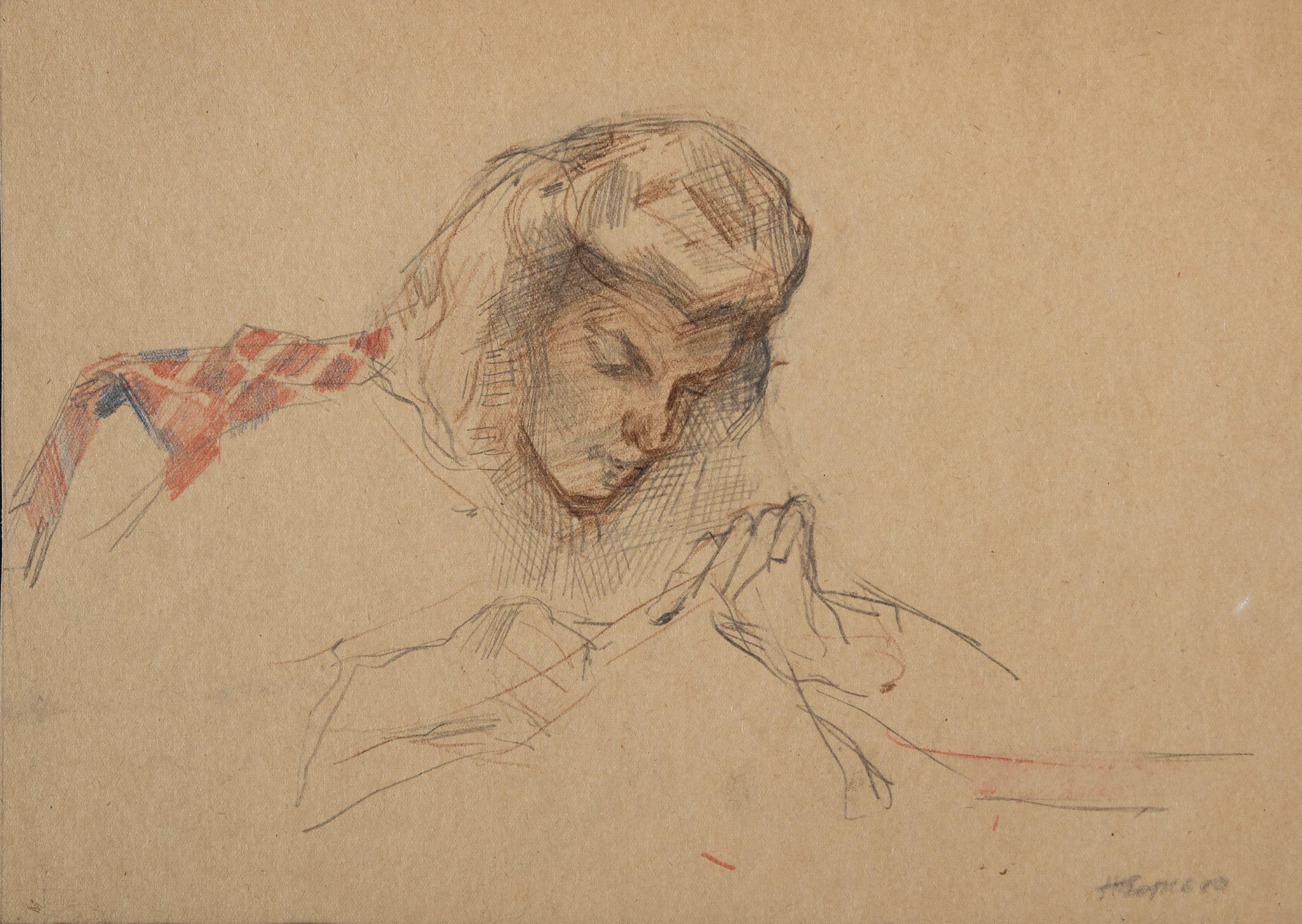
Woman, 1962. Graphite and colored pencil on paper, 20.2 × 28.8 cm (7 15/16 × 11 5/16 in.). Norton and Nancy Dodge Collection of Nonconformist Art from the Soviet Union. D00628
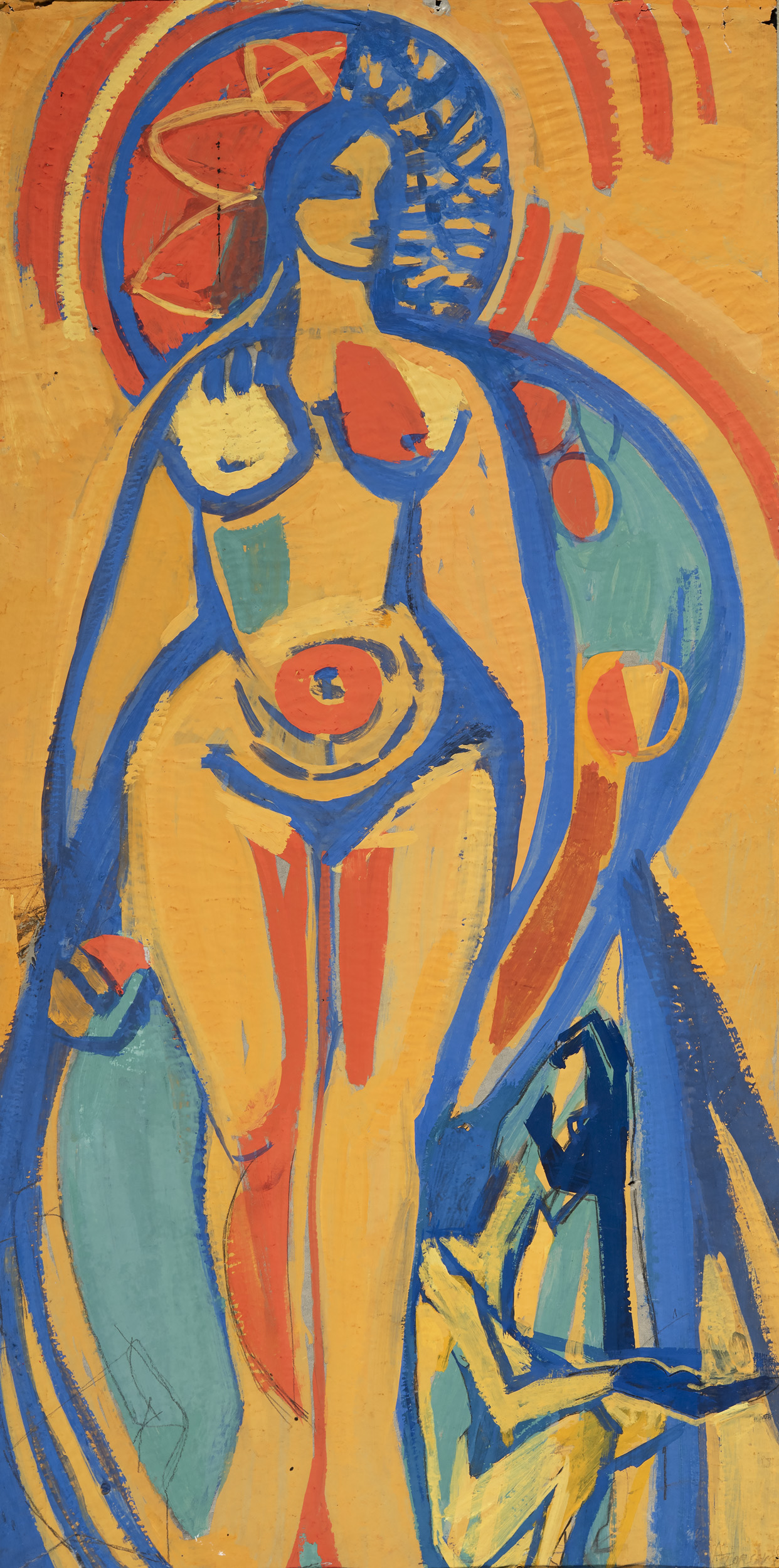
Woman-Summer, 1963. Gouache on glassine, 76.7 × 39.6 cm (30 3/16 × 15 9/16 in.). Norton and Nancy Dodge Collection of Nonconformist Art from the Soviet Union. D00623

Silence, 1964. Gouache and graphite on paper, 51.8 × 16.9 cm (20 3/8 × 6 5/8 in.). Norton and Nancy Dodge Collection of Nonconformist Art from the Soviet Union. D00622

Near the River, 1963. Gouache on paper, 75.3 × 40 cm (29 5/8 × 15 3/4 in.). Norton and Nancy Dodge Collection of Nonconformist Art from the Soviet Union. D00624
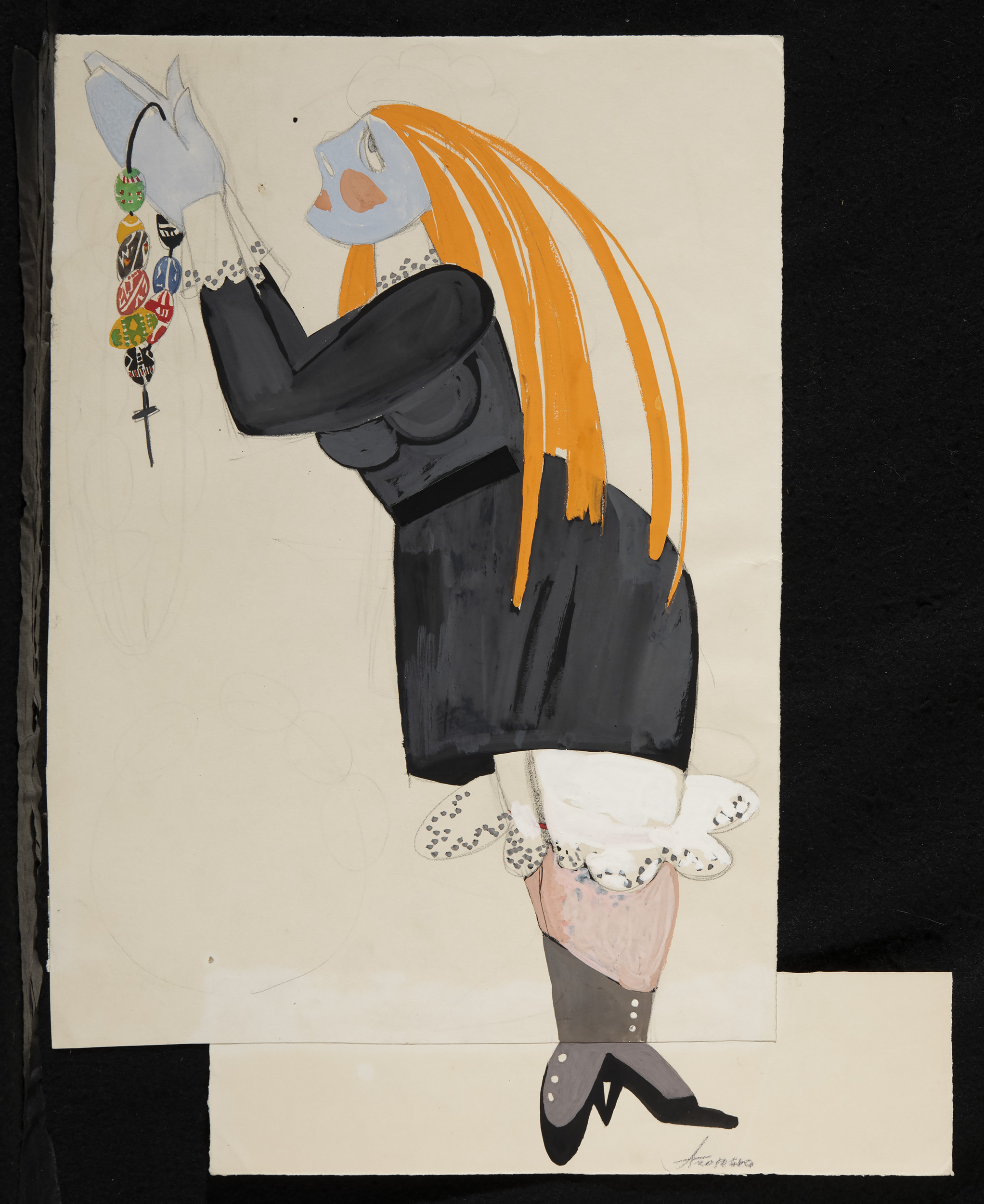
Orange Woman, 1962. Gouache and graphite on paper, 49.2 × 39.2 cm (19 3/8 × 15 7/16 in.). Norton and Nancy Dodge Collection of Nonconformist Art from the Soviet Union. D00627
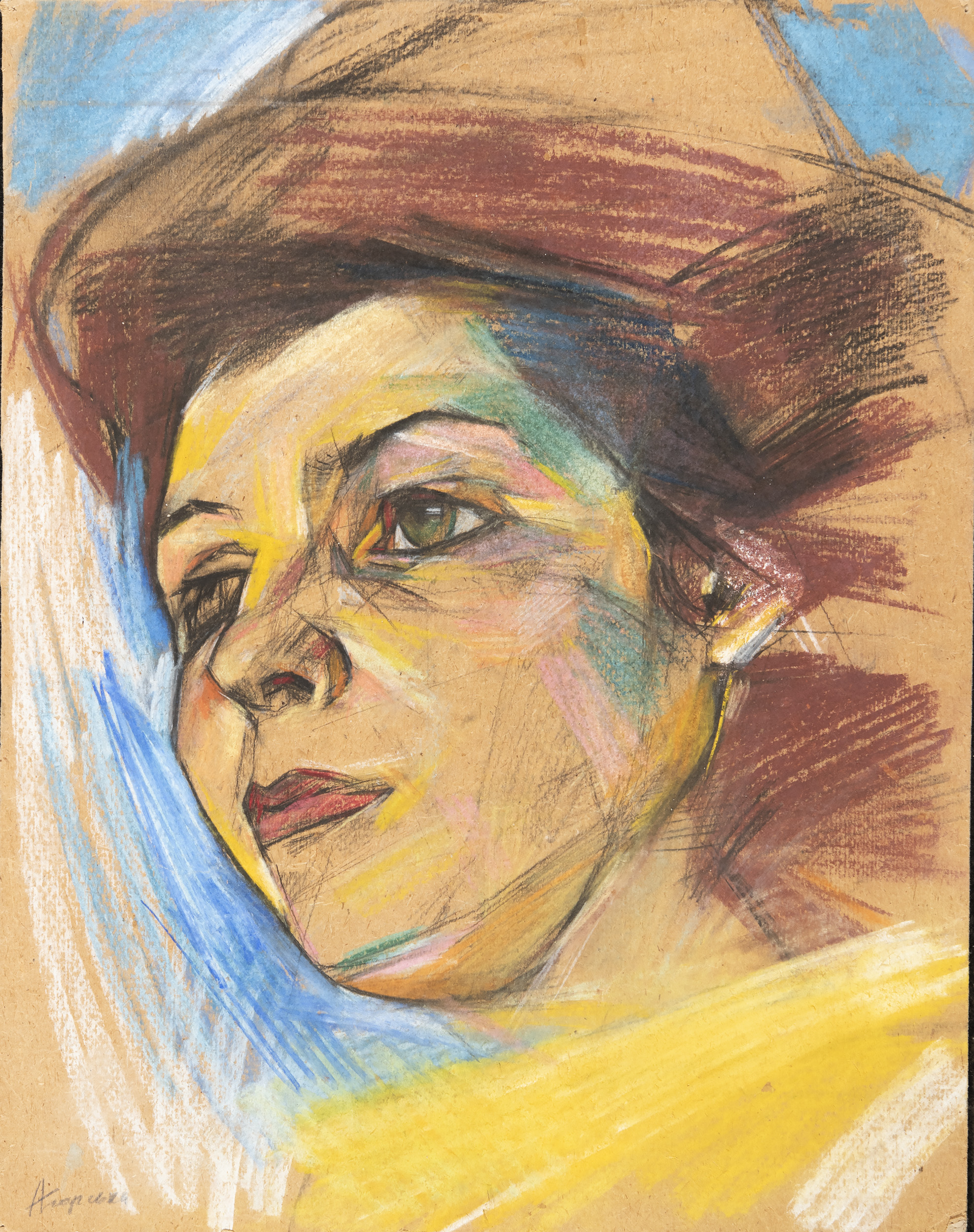
Untitled, undated. Pastel and graphite on illustration board, 43.7 × 33.5 cm (17 3/16 × 13 3/16 in.). Norton and Nancy Dodge Collection of Nonconformist Art from the Soviet Union. D00629