
Algimantas Jonas Kuras
1940 — Šakiai (Lithuania). Works in Vilnius (Lithuania)
Algimantas Jonas Kuras graduated from the State Art Institute of the Soviet Socialist Republic of Lithuania (now the Vilnius Academy of Arts) in Lithuania in 1966 and participated in art exhibitions beginning that same year. During the 1960s and ’70s, together with fellow Lithuanian painters Kostas Dereškevičius (1937–2023), Arvydas Šaltenis (b. 1944), and Algimantas Švėgžda (1941–1996), he focused on the representation of unadorned everyday objects by deromanticizing them. For Kuras, this meant painting unattractive, bulky, and dull familiar objects, such as old wire, a dusty worn coat, a rusty separator, and large machinery—a purposeful attempt to move away from the Soviet dictates, which encouraged artists to embellish reality and which overshadowed Lithuanian art before the country’s independence in 1990. Kuras’s conviction to portray life as it is attests to his nonconformist nature and his unique ability to see and manifest ugliness as beauty. His undecorated canvases and assemblages can be viewed as indicators of the murky life in the Soviet Union.
In his early works, Kuras painted typical motifs of still lifes with diminutive gods and landscapes; however, he quickly developed a distinctive style that was independent of prevailing genres. In his In the Railway Station (1972, ZAM, D10665), Kuras satirizes Soviet everyday life by depicting a group of people who are defecating in the station’s public toilets. Unlike Šaltenis, Kuras never explores the nature and psychology of his characters; rather, he focuses on the social aspect and mood by representing his figures from afar, from behind, or even transforming them into archetypes.
Kuras is not as interested in people as he is in their effects on the environment. Beginning in the late 1960s, his artworks show the relentless and brutal invasion of industry on the Lithuanian landscape, and they depict nature and technology as irreconcilable opposites. This might be due to his upbringing in rural Lithuania and his response to the devastation of nature. In a typical scene, like the one represented in the somber-toned composition Evening Landscape (1984, ZAM, D04265), a rickety but menacing apparatus appears abandoned in a green field under an overcast sky. This foreign mechanical intruder contrasts heavily with the traditional Lithuanian landscape of lush meadows and dark-brown plows. In the dusk lighting, these industrial scarecrows are anthropomorphized—their threatening personalities strive to overshadow nature’s harmony. These compositions can be interpreted as coded innuendos referring to the devastating effects of Soviet collectivization on the Lithuanian countryside.
The passage of time is also an active agent in Kuras’s art. As physical matter decays, reminding the viewer of life’s temporality and fragility, indirect allusions to death and dying permeate the artist’s works with disquieting feelings, similarly to Western expressionist artists Edvard Munch and Emil Nolde. Nonetheless, there is a strange serenity in Kuras’s landscapes that is based on the simple composition of the earth below, the sky above, and a horizon line dividing the two. The slow rotting of the objects that rest firmly on the solid ground instills in the viewer a sense of reassurance and calm.
The “unattractive” objects that the artist selects as characters for his scenes are without pathos, poetry, or any pretense of adoration. They are symbols of a mostly unhappy simplicity of life and are often described as “obscure,” “fading,” and “disintegrating,” with the artist’s ambivalence toward either ugliness or beauty.
Similar to his paintings, Kuras’s assemblages comprise old, discarded everyday objects, such as plastic and ceramic toys, metal leaves and flowers, plastic spoons, dolls and their body parts, as well as materials that can be found in a shed or a garage, including splinters of tin, plastic tubes, and newspapers. Whereas the works of Valentinas Antanavičius (1936–2024), who is considered the pioneer of assemblage in Lithuania, have a strong political and satirical charge, Kuras’s assemblages are comical, playful, and ironic. Kuras was one of the semi-nonconformist painters in Group 24 [Grupė 24]. [1]
Kuras’s main influences are Lithuanian painters from the first half of the twentieth century, notably Vytautas Kairiūkštis (1890–1961), Antanas Samuolis (1899–1942), and Viktoras Vizgirda (1904–1993), as well as the French painter Georges Braque. In return, Kuras’s work has had a strong impact on a younger generation of Lithuanian painters, namely Henrikas Natalevičius (b. 1953), Mindaugas Skudutis (b. 1948), and Raimundas Sližys (b. 1952), and he continues the long-standing tradition of the Lithuanian school of expressionism.
From 1994 to 2005 Kuras was a tutor in the painting department of the Vilnius Academy of Arts. In 2003 he was awarded the Lithuanian National Prize for Culture and Arts, which is considered the greatest cultural achievement in Lithuania. Along with the Jane Voorhees Zimmerli Art Museum, the artist’s works are held in the Lithuanian National Museum of Art; the M. K. Čiurlionis National Museum of Art, Kaunas; the State Tretyakov Gallery, Moscow; the Latvian National Museum of Art, Riga; and private collections in Lithuania and abroad.
Paulius Andriuškevičius
Photo portrait: Algimantas Žižiūnas
Notes
1. Group 24, initiated by P. R. Vaitiekūnas, was made up of Lithuanian artists and art historians (the name refers to the largest possible number of members). It was active from 1989 to 2000, with its first exhibition opening on February 23, 1990, in Vilnius. In 1990 the group published a manifesto establishing its goal—to unite artists of different generations and artistic styles for common artistic activity. The members were united by their proximity to art based on modernist principles, a similar perception of artistic goals, and the most common principles of creation.
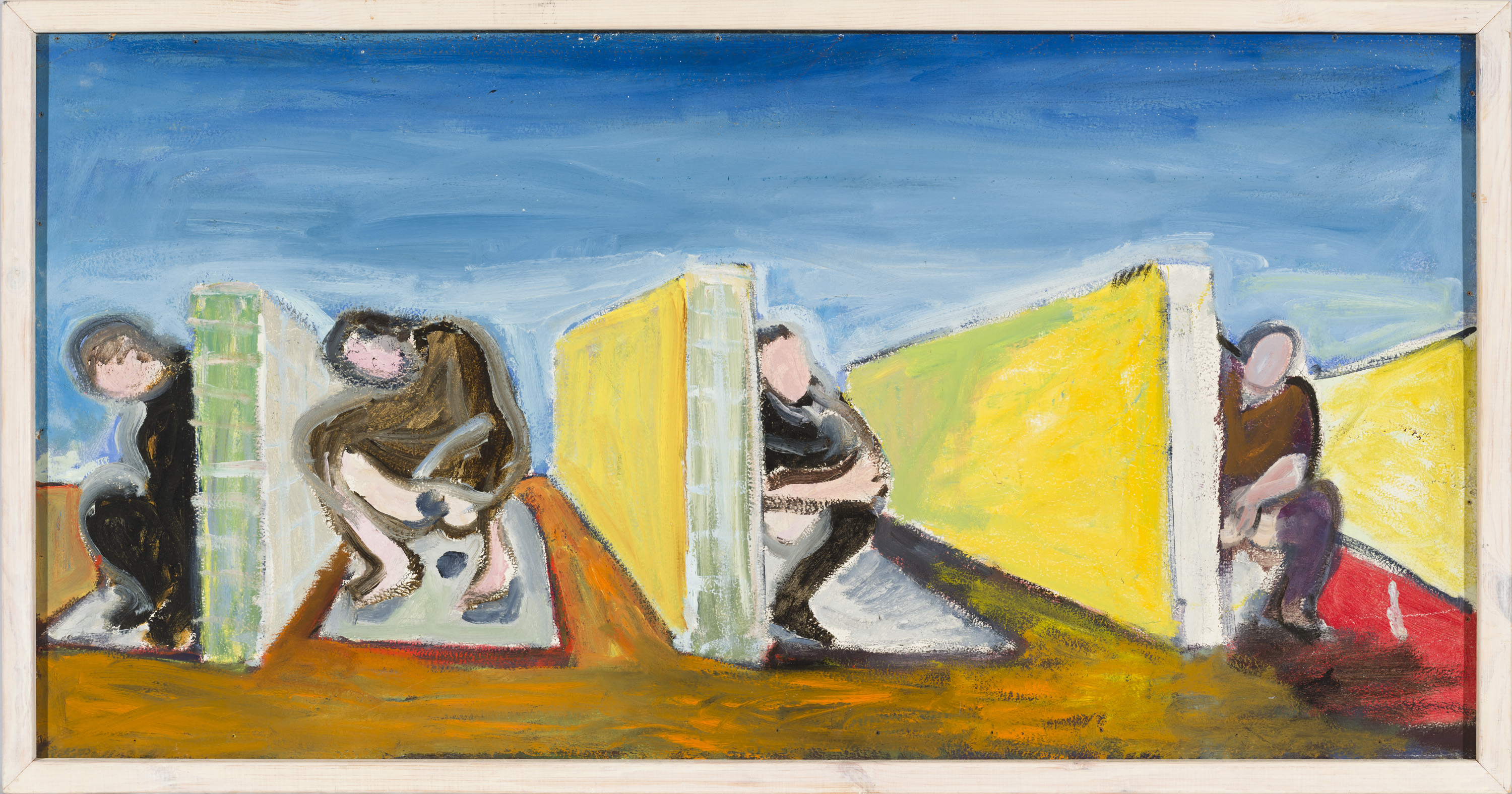
In the Railway Station, 1972. Oil on fiberboard, 62 × 122 cm (24 7/16 × 48 1/16 in.). Norton and Nancy Dodge Collection of Nonconformist Art from the Soviet Union. D10665
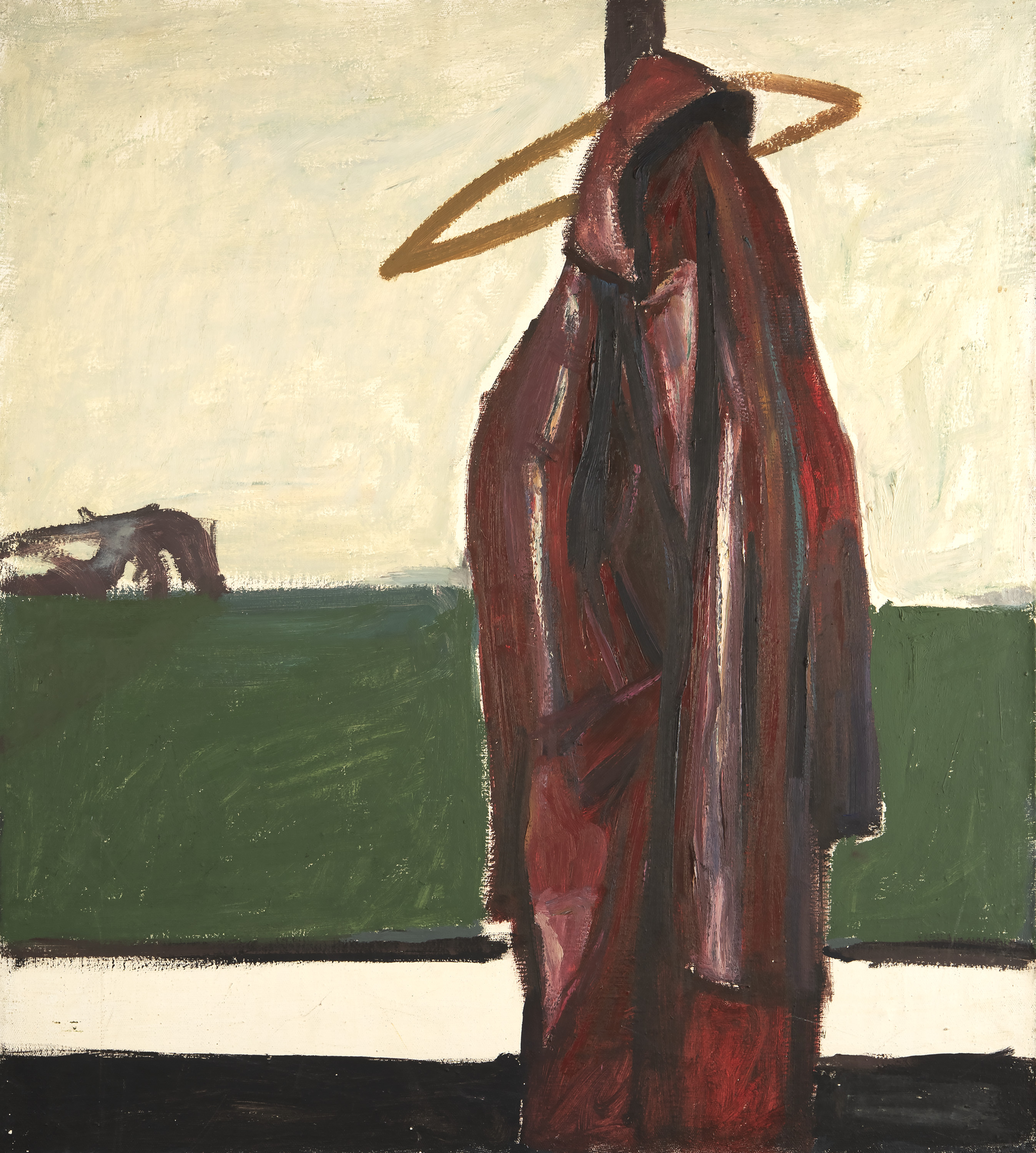
Hanging Cloth, 1974. Oil on linen, 82.3 × 73.8 cm (32 3/8 × 29 1/16 in.). Purchased with funds donated by Norton Dodge and Nancy Dodge. 2003.0072

Installation, 1976-1978.Oil on fiberboard, 96.7 × 83.3 cm (38 1/16 × 32 13/16 in.). Norton and Nancy Dodge Collection of Nonconformist Art from the Soviet Union. D01415

Untitled, 1980. Oil on canvas, 99.5 × 124.4 cm (39 3/16 × 49 in.). Norton and Nancy Dodge Collection of Nonconformist Art from the Soviet Union. D16846
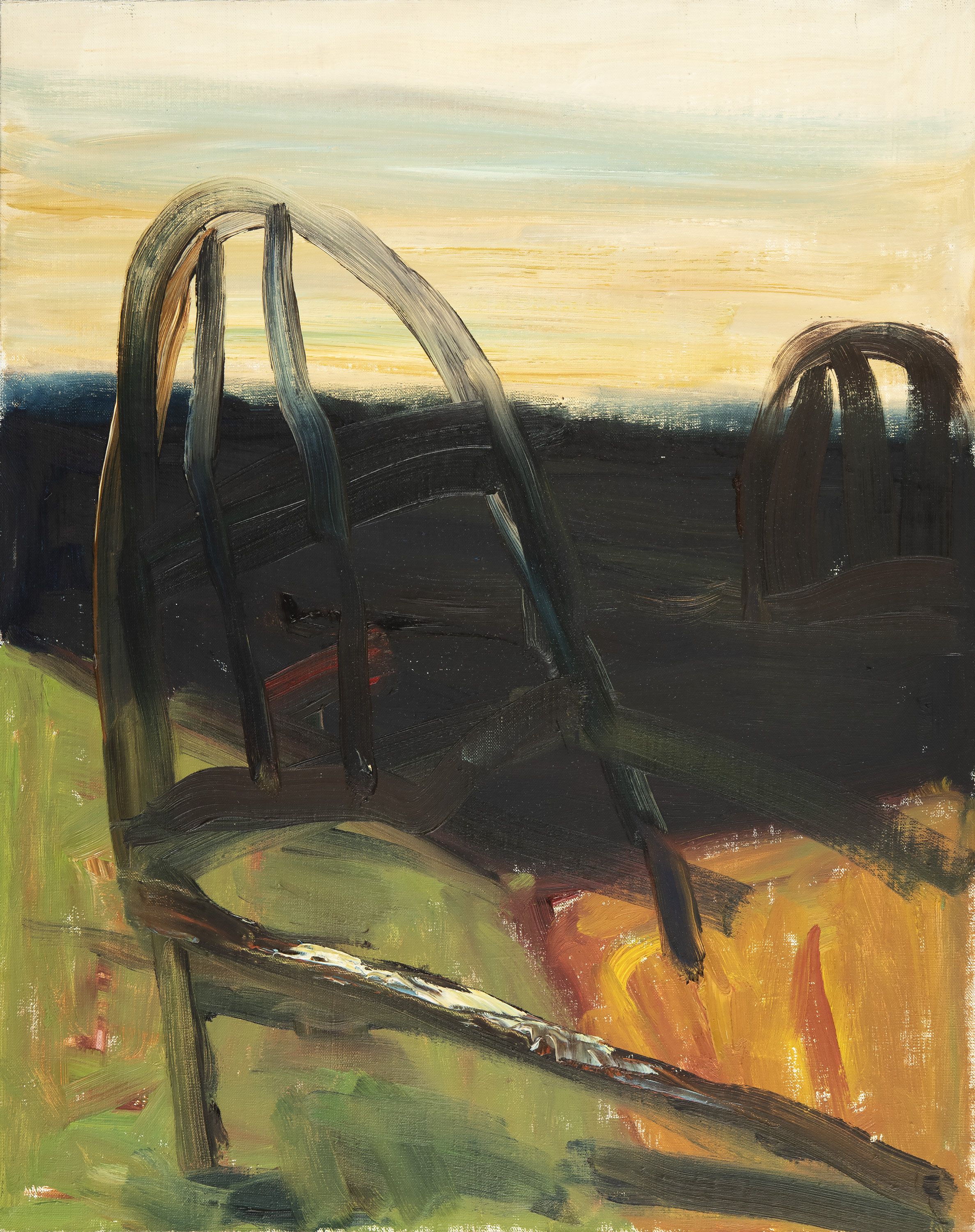
Evening Landscape, 1984. Oil on canvas, 50 × 39.8 cm (19 11/16 × 15 11/16 in.). Norton and Nancy Dodge Collection of Nonconformist Art from the Soviet Union. D04265
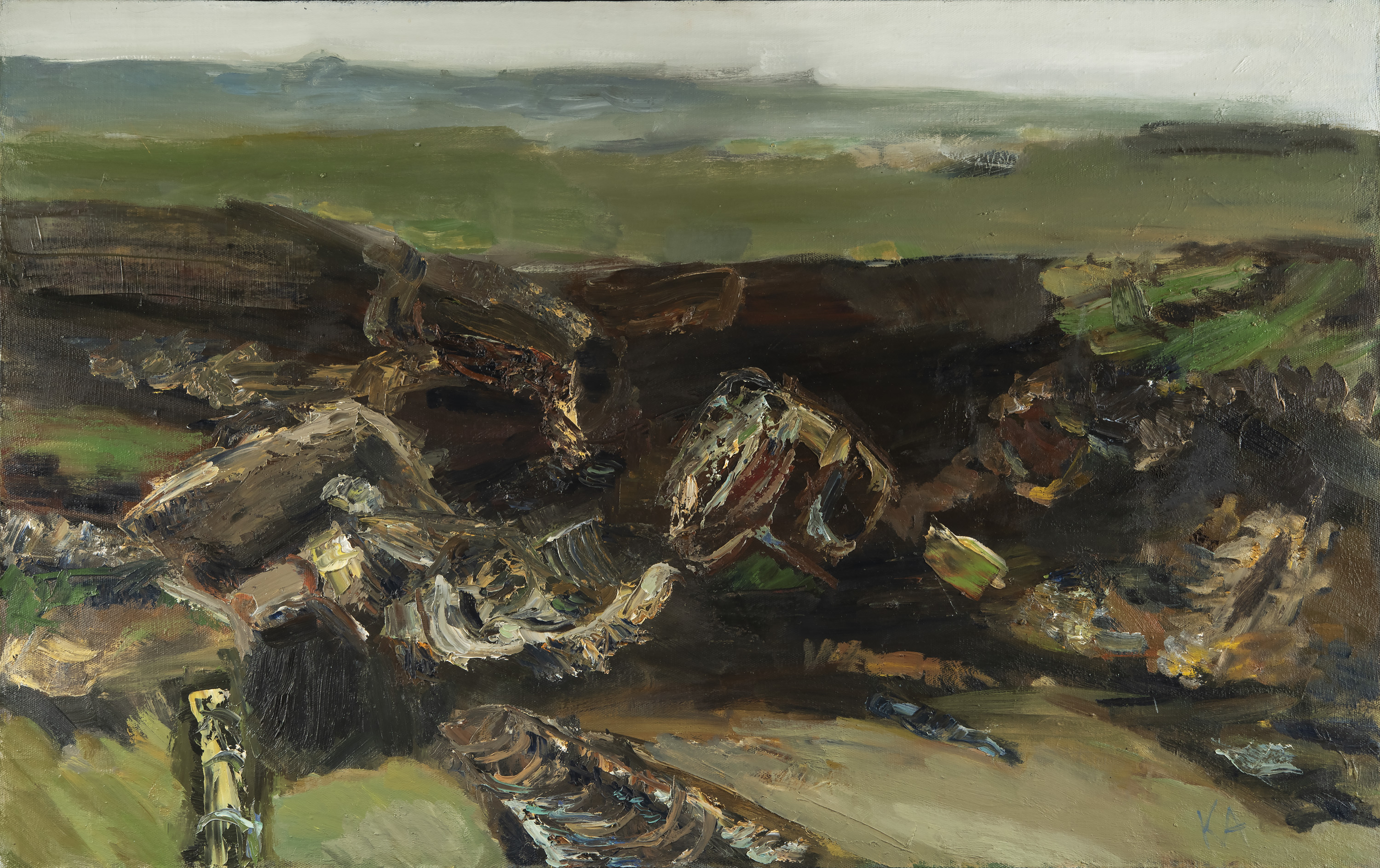
Untitled, 1985. Oil on canvas, 80.3 × 125 cm (31 5/8 × 49 3/16 in.). Norton and Nancy Dodge Collection of Nonconformist Art from the Soviet Union. D04176

Garden of Broken Monuments, 1986. Oil on canvas, 99.8 x 125.5 cm (39 5/16 x 49 7/16 in.). Norton and Nancy Dodge Collection of Nonconformist Art from the Soviet Union. D11454