
Alexander Uglianitsa
1958 — Stavropol (Russia) | 2020 — Minsk (Belarus). Lived and worked in Minsk (Belarus)
Alexander Uglianitsa holds an important place in the history of Belarusian art as an original and inventive photographer and a member of the META group. The beginning of the group dates back to 1980, when Uglianitsa was studying design at the Belarusian State Theater and Art Institute (now the Belarusian State Academy of Arts). During his time there, he met Victor Kalenik and later, in 1983, Alexei Trufanov. By 1987, the META group had solidified its core with the addition of Mikhail Garus and Yuri Tryanov. The members of the group were also integrated into the broader Belarusian photographic community, particularly through their association with the Minsk Photo Club and, more specifically, Studio No. 3, a creative photography section run by the well-known photographer and teacher Valery Lobko (1951–2008). The group’s formal and technical experiments reflect the new direction in Belarusian photography in the 1980s and 1990s, and META is associated with the phenomenon known as the Minsk school of photography.
The META group was one manifestation of a widespread trend toward the emergence of creative youth communities in the USSR in the 1980s. On the one hand, this development reflected a certain loosening of the government’s political and ideological control leading up to and during perestroika. At the same time, these movements—in music, photography, literature, and the visual arts—expressed an urgent need for new forms of expression, for ways to broaden one’s perspective on the world and find new images and meanings outside of formal education and official culture, which still privileged socialist realism. [1] This search for alternative modes of expression correlated with a newfound interest in Eastern philosophies, esotericism, and Zen Buddhism. The name of the group, META, is most likely a reference to metarealism—a term introduced in 1982 by the writer Mikhail Epstein (b. 1950) to describe a new trend in contemporary Russian literature. Epstein defined metarealism as a “realism of multiple realities, connected by the continuity of internal metabolic transformations.” [2]
From its inception, the META group embodied a spirit of intellectual exchange and collaborative creation. Members engaged in daily photographic sessions, critiqued each other’s work, engaged in lively discussions, and experimented with processing and printing techniques. When he recalled encountering Uglianitsa’s photographs for the first time, Trufanov noted being impressed by their subject matter, striking style, and transgression of the norms of official art. [3]
Uglianitsa’s early work primarily features black-and-white photography, a readily available and accessible medium that allowed him freedom of exploration not only in terms of subject matter and style, but also in approaches to technical processing and editing. Works in the Zimmerli collection reflect the variety of expressive methods he used to manipulate images. Untitled (from the series Flowers, 1984, ZAM, D16216) features a blurry silhouette of flowers in the extreme foreground against a dark background of the leaf-covered ground, captured in sharp focus. This juxtaposition creates a vertiginous perspective that disrupts the viewer’s sense of scale and spatial orientation. A similar method is used in Untitled (1984, ZAM, D15028), with the upper third of the image dominated by a partial, out-of-focus view of a hand holding what appears to be a papirosa (папироса, a cardboard-tubed cigarette common in the Soviet Union). The blurring of the hand’s contours, together with the swirl of the rising smoke from the papirosa, lends the image both dynamism and strangeness. This uncanny quality is intensified by the object at the right edge of the frame: the highlighted lip of its opening suggests a cast-iron or ceramic pot, yet the remainder of its body is engulfed in darkness, so that it appears formless and free-floating. In the middle-ground, the sharp highlights of lit candles and the light reflecting off glass and dishes further confound the spatial relationships between objects. The result is a haunting, mirage-like image that estranges and monumentalizes otherwise ordinary objects and gestures.
Uglianitsa also often turned to the serial format, using the same shot as a starting point to produce a series of images that mutate from iteration to iteration in an almost narrative fashion. This is the case of two works from 1986 (Untitled, ZAM, D15031, and Untitled, ZAM, D15032). In the latter, the scratching and bleaching of the print serve to highlight the face of a man who appears either to be choking or being choked. The gestural, dynamic quality of the marks scored across the photograph’s surface creates a disturbing echo of the violent gesture: the figure is assailed at once at his neck and through the surface of the image. In the other photograph (D15031), the figure’s face and the hands at his neck are all but obliterated by streaks of white and greenish-blue splashed across the surface—a defacement that reads as particularly poignant when viewed on a continuum with the first image.
In 1988, META’s members presented their work in the exhibition Beginning (Пачатак), held at the Minsk House of Cinema (now the Red Cathedral), which also featured other groups that came to be associated with the Minsk school of photography, such as Panorama (Панорама/Панарама) and Province (Провинция/Правінцыя). The exhibition stands as an important moment in the history of the Minsk school, highlighting both the diversity of approaches to photographic experimentation and the interconnectedness and exchange among different collectives that constituted it.
By 1994, only Uglianitsa and Kalenik remained active in META. Nonetheless, they continued to meet regularly, discussing photography in general and their latest works in particular. Uglianitsa died in Minsk in 2020, marking the end of the META group. In addition to his experimental photographic works, Uglianitsa left behind a rich photographic archive that documented the nonconformist art world of the 1980s. [4] Together, these two bodies of work represent an invaluable record of creativity and artistic invention in late- and post-Soviet Belarus.
Tatsiana Zhurauliova
Photo portrait: Photographer unknown. Source: Nasha Niva.
Notes:
1. For a detailed discussion of the context for the proliferation of creative communities and groups in the Belarusian art world of the 1980s, see Tania Arcimovič, “‘Freedom Cannot Be Personal,’ or Art as a Restrictions Antithesis,” in Artur Klinau, ed., Minsk: Non-conformism of the 1980s (Minsk: Kalektsyya pARTyzana; Galіyafy, 2016).
2. Epstein, Mikhail. “Proyektivny slovar filosofii. Novye ponyatiya i terminy. №19. Filosofiya iskusstva i kultury—metarealizm, metabola i rizoma” [Projective dictionary of philosophy. New concepts and terms. No. 19. Philosophy of art and culture—metarealism, metabola, and rhizome]. In Topos, July 21, 2004. See also Mikhail Epstein, Postmodern v russkoy literature [Postmodernism in Russian literature] (Moskow: Vysshaya shkola, 2005), 163–95.
3. Prevrashcheniye. Metarealizm v belorusskoy fotografii 1980–kh—nachala 1990–kh godov [Transformation. Metarealism in Belarusian photography of the 1980–1990s]. ROSPHOTO, Saint Petersburg, 2023.
4. Notably, Uglianitsa’s photographs represent the core of photographic documentation reproduced in Klinau, Minsk: Nonconformism of the 1980s.
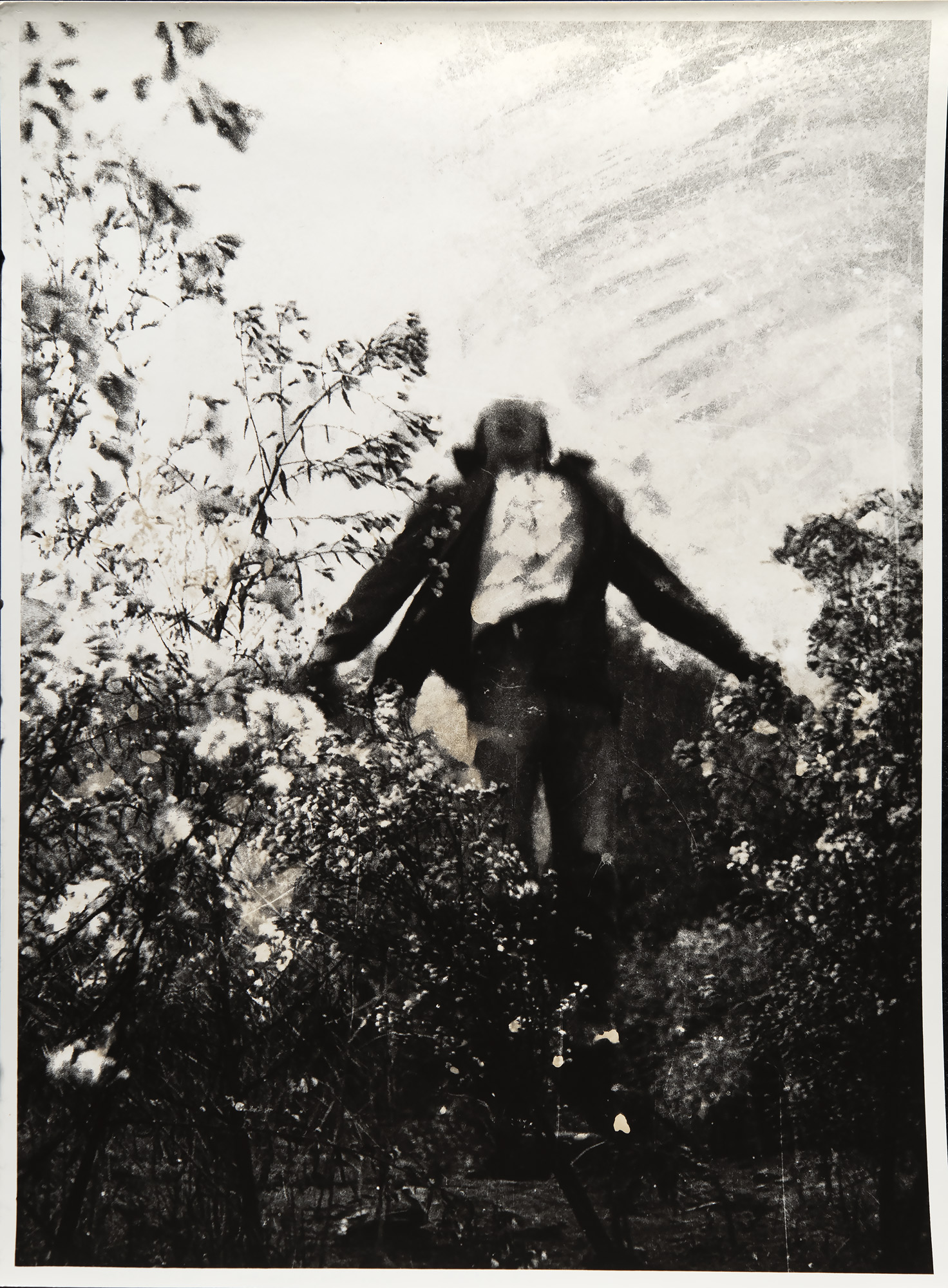
Untitled, 1983. Toned gelatin silver print on paper, 36.7 × 27 cm (14 7/16 × 10 5/8 in.). Norton and Nancy Dodge Collection of Nonconformist Art from the Soviet Union. D15033
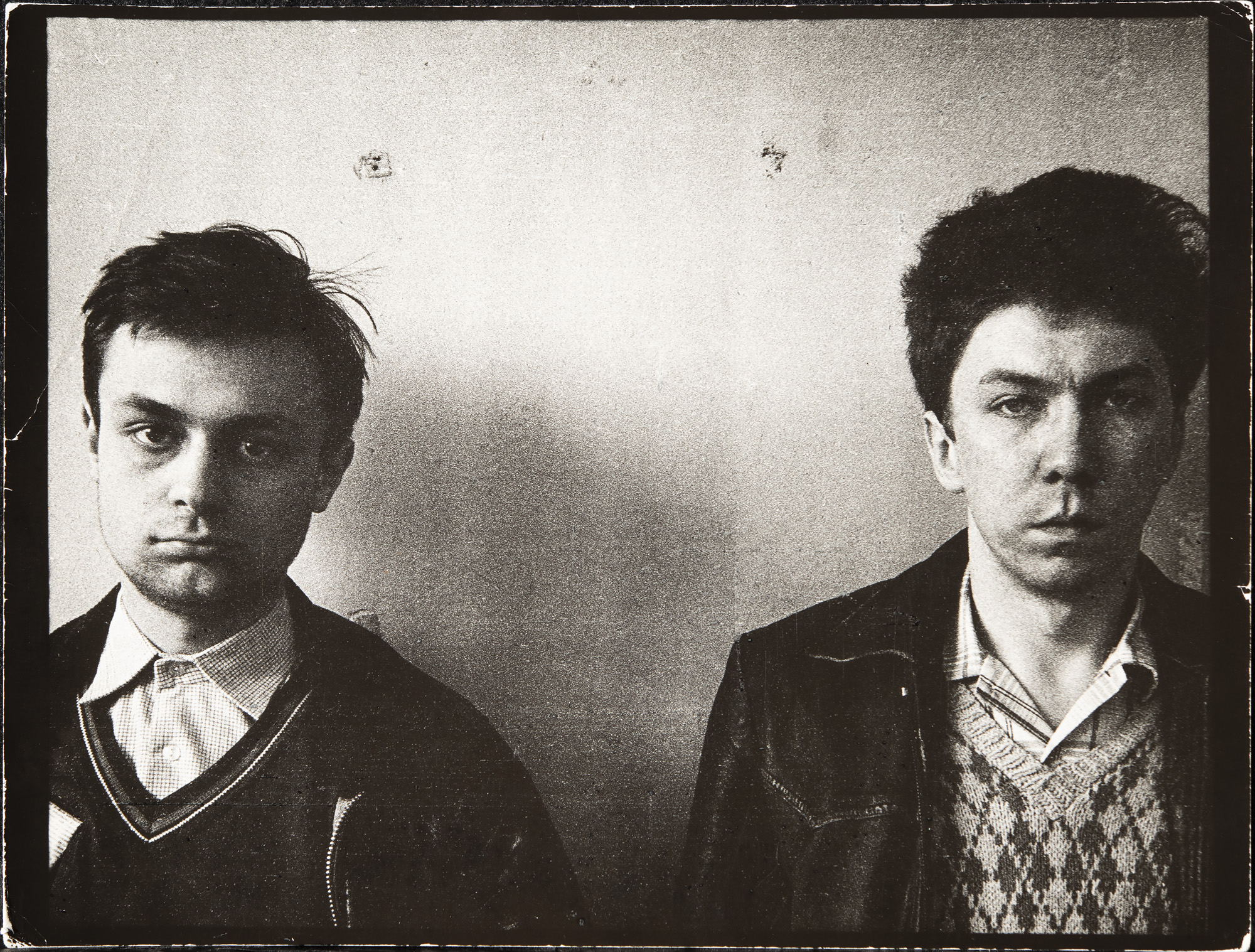
Victor Kalenik & Alexander Uglianitsa, 1986. Toned photograph on paper, 15.5 × 23.7 cm (6 1/8 × 9 5/16 in.). Norton and Nancy Dodge Collection of Nonconformist Art from the Soviet Union. D16215
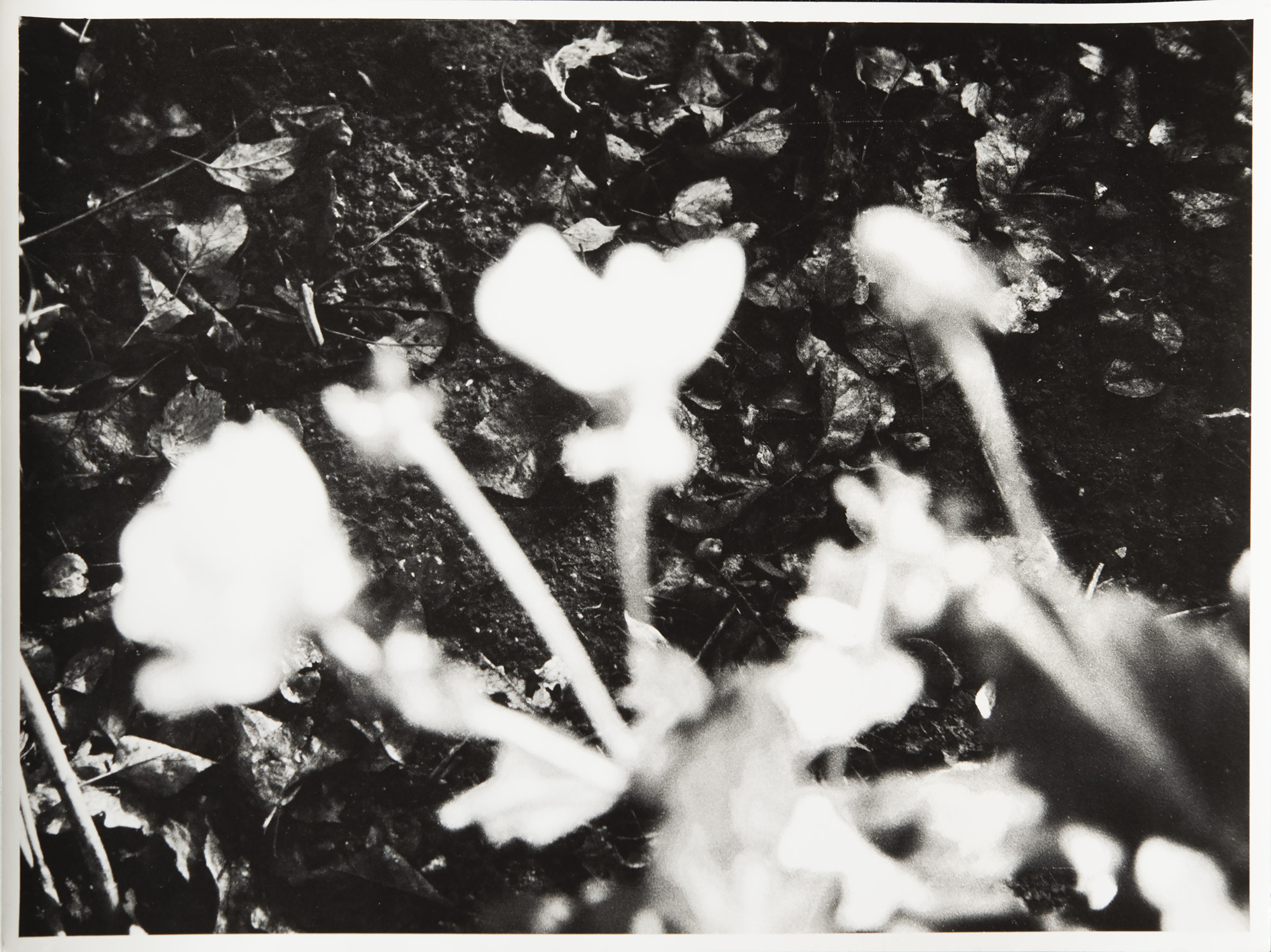
From the series Flowers, 1984. Photograph on paper, 27.2 × 36.6 cm (10 11/16 × 14 7/16 in.). Norton and Nancy Dodge Collection of Nonconformist Art from the Soviet Union. D16216

Untitled, 1984. Photograph on paper, 20 × 20.6 cm (7 7/8 × 8 1/8 in.). Norton and Nancy Dodge Collection of Nonconformist Art from the Soviet Union. D15028

Untitled, 1986. Toned photograph on paper, 27.3 × 36.7 cm (10 3/4 × 14 7/16 in.). Norton and Nancy Dodge Collection of Nonconformist Art from the Soviet Union. D15031

Untitled, 1986. Toned gelatin silver print on paper, 27.1 × 36.8 cm (10 11/16 × 14 1/2 in.). Norton and Nancy Dodge Collection of Nonconformist Art from the Soviet Union. D15032