
Alexander (Shura) Bandzeladze
1927 — Tulun, Irkutsk Oblast (Russia) | 1992 — Tbilisi (Georgia). Worked in Tbilisi (Georgia)
Georgian painter and graphic artist Alexander (Shura) Bandzeladze started out as an illustrator of children’s books. Later, he became closely associated with the “second wave” of Georgian abstraction as well as the revival of Georgian religious painting. His works in in the Zimmerli Museum were created during the most fruitful, later phases of his creative journey.
In 1942, Bandzeladze embarked on studies at Tbilisi Art College. After graduation, he continued his training in the painting faculty at the Tbilisi State Academy of Fine Arts. Bandzeladze’s outspoken criticism of the Soviet regime led to his expulsion from the Academy in his second year. Beginning in the mid-1930s, the Soviet authorities persecuted artists who worked in styles or idioms that diverged from socialist realism and its glorification of Soviet reality. In this political climate, Bandzeladze’s status was perilous and unenviable.
From the early 1940s, Bandzeladze began collaborating with various publishing houses, illustrating children’s books for SABLITGAMI, SAKHELGAMI, Nakaduli, and Sabchota Sakartvelo, among others. [1] It was the artist’s children’s book illustrations that first introduced his work to the public. At the time, Bandzeladze’s style was not seen as conflicting with the demands of socialist realism. His manner of painting was academic, which aligned with one of the main requirements of socialist realism—the “truthfulness of form” (Self-Portrait, 1950; Snow in November, 1953; Portrait of Ioseb Grishashvili, 1954). His book illustrations were well liked, and the artist received more and more commissions for such work. In the 1950s and 1960s, Bandzeladze’s illustrations frequently appeared in the children’s magazines Pioneer and Dila (Morning). They could also be found in Soviet editions of Western literary works, such as Daniel Defoe’s Robinson Crusoe (SABLITGAMI, 1956) and Ernest Hemingway’s The Old Man and the Sea (SABLITGAMI, 1957), as well as works by Georgian poets including Grigol Abashidze’s Lasharela (SAKHELGAMI, 1958) and Vazha Pshavela’s The Tale of the Roe (Nakaduli, 1962).
Throughout his career, Bandzeladze would revisit themes, each time in a different manner and with a different inflection or emphasis in the interest of varying aesthetic goals. This is seen, for example, in his illustrations of Rudyard Kipling’s Mowgli stories and the Georgian folk epic Poem of Arsena. In the 1950s, in parallel with his work as an illustrator, Bandzeladze also began devoting his creative energies to easel painting. He initially focused on portraiture, as seen in his famous renderings of Galaktion Tabidze (1952), Tamar Abakelia (1950s), and Dodo Chichinadze (1950s). [2]
During the Stalin era, Georgian artists who worked in European modernist styles such as cubism were condemned by the regime. In the 1950s, however, amid the liberalizing period of the Khrushchev Thaw, Bandzeladze and other Georgian artists such as Guram (Hita) Kutateladze (1924–1979) and Tengiz Mirzashvili (1934–2008) began exploring these formerly prohibited trends. Drawing on the limited information available on these movements in Georgia, they chose impressionism as a point of departure. In addition to impressionism, Bandzeladze also explored pointillism, fauvism, and cubism, adapting them to the Soviet context. In 1963, also amid the Thaw, the Tbilisi State Academy of Arts made a curious decision. On its own initiative, the Academy—which had expelled the artist twenty years earlier—issued a diploma to Bandzeladze, who by this point was widely recognized for his book designs and had been a practicing artist for some two decades.
Bandzeladze’s exploration of modern European idioms ultimately led him to abstraction, which he regarded as the means of expression most conducive to what he wished to convey. Among all modernist styles, the Soviet regime deemed abstraction the most antithetical to socialist realism and to its ideology. As a result, abstraction nearly disappeared for several decades during the Stalin era. Nonetheless, some knowledge of abstraction endured in Georgian artistic culture. Georgian art of the 1910s–30s included practitioners of abstraction, most notably, David Kakabadze (1889–1952). In the 1950s, Bandzeladze and his fellow Georgian artists ushered in the “second wave” of Georgian abstractionism.
Bandzeladze was more drawn to contemporary strains of abstraction than earlier works in this mode: specifically, abstract expressionism and French tachisme. He first encountered these styles in magazine illustrations (for example, the magazine America), and later on, at exhibitions in Moscow, where, under Khrushchev, information about the West became more accessible (of course, information that had first passed through the government’s censorship channels).
During the second half of the artist’s career (the 1970s and 1980s), Bandzeladze’s oeuvre was dominated by abstraction. In the eyes of the public, he was an abstract artist, having been included, for example, in major exhibitions of Georgian nonfigurative artists in Moscow and Tbilisi in 1987. In his search for a personal style, Bandzeladze passed through various stages of abstractionism. In his early nonobjective works, it is possible to discern an image or a shape that suggests an image. In later compositions, however, which center painting itself, any hint of an identifiable motif is absent.
Especially in his works from the 1980s, most of which are untitled, the artist prioritized color and the relationship between space and flatness, dynamism and stillness. During the latter part of the decade, the artist created some of the defining works of his career: laconic, minimalist, nonfigurative compositions as well as abstract works remarkable for their bold colors and densely packed compositions. These paintings feature characteristic elements of early European abstraction, together with postwar European and American abstract currents, including abstract expressionism.
Concurrent with his work in abstraction, especially in the 1970s, the artist created monumental socialist realist paintings: Continuation of the Legend (ლეგენდის გაგრძელება, 1971; Georgian National Museum), Georgian Village (ქართული სოფელი, 1976), Tbilisi Department Store (ამჟამად აღარ არსებობს), and Argonauts (არგონავტები, 1977). These works depict various themes favored by the Soviet regime: World War II; building a better nation; peasants and workers engaged in labor. He also designed the interiors of a bazaar and hotels, along with other public spaces, and worked on sketches of stained-glass windows for vacation homes. [3]
Along with Lado Gudiashvili (1896–1980) and Levan Tsutskiridze (1926–2021), Bandzeladze is also associated with the revival of Georgian religious painting. From 1978 to 1988, Bandzeladze painted murals for Didube Church in Tbilisi, which was built in 1884, replacing a previously existing church on that site. During the Russian Empire, many works of religious art had been destroyed. Under Soviet rule in Georgia, decorating religious buildings, alongside religious practice itself, was forbidden. Churches were demolished, and knowledge of their wall paintings had nearly disappeared. Bandzeladze devoted considerable energy not only to creating religious iconographical programs, but also to learning the technique of fresco.
In the final phase of his career, between 1988 and 1992, the artist focused on illustrating the Georgian medieval epic poem The Knight in the Panthers Skin. After the artist’s late abstractions, it is these illustrations (that remained unfinished, as he was still working on them up until the time of his death) that best demonstrate Bandzeladze’s individual style. It is unclear whether he wanted these works to be included in a book, since the images are more of a retelling constructed with visuals rather than illustrations per se. For these works, Bandzeladze drew, copied the text by hand, decorated it, and, similar to medieval scribes, accompanied it with personal, subjective notes. His reimagining of this Georgian epic poem, which had been illustrated by many other previous artists, was entirely new.
Tamar Belashvili
Translated from Georgian by Nino Gabunia
Notes:
1. SABLITGAMI was the state publishing house for youth literature. SAKHELGAMI was the state publishing house.
2. Galaktion Tabidze (1892–1959) was a noted famous Georgian poet whose work contributed greatly to the history of Georgian poetry. Tamar Abakelia (1905–1953) was a Georgian sculptor, painter, and set designer for theater and films. Dodo Chichinadze (1924–2009) was a famous Georgian actress of both stage and screen.
3. Pictures and sketches are all that remain, as the bazaar was later demolished, and Bandzeladze’s Georgian Village artwork did not, survive, either. His composition Argonauts was intended for a vacation home in Abkhazia.

Untitled, 1983. Oil on canvas, 140 × 120.6 cm (55 1/8 × 47 1/2 in.). Norton and Nancy Dodge Collection of Nonconformist Art from the Soviet Union. D06048
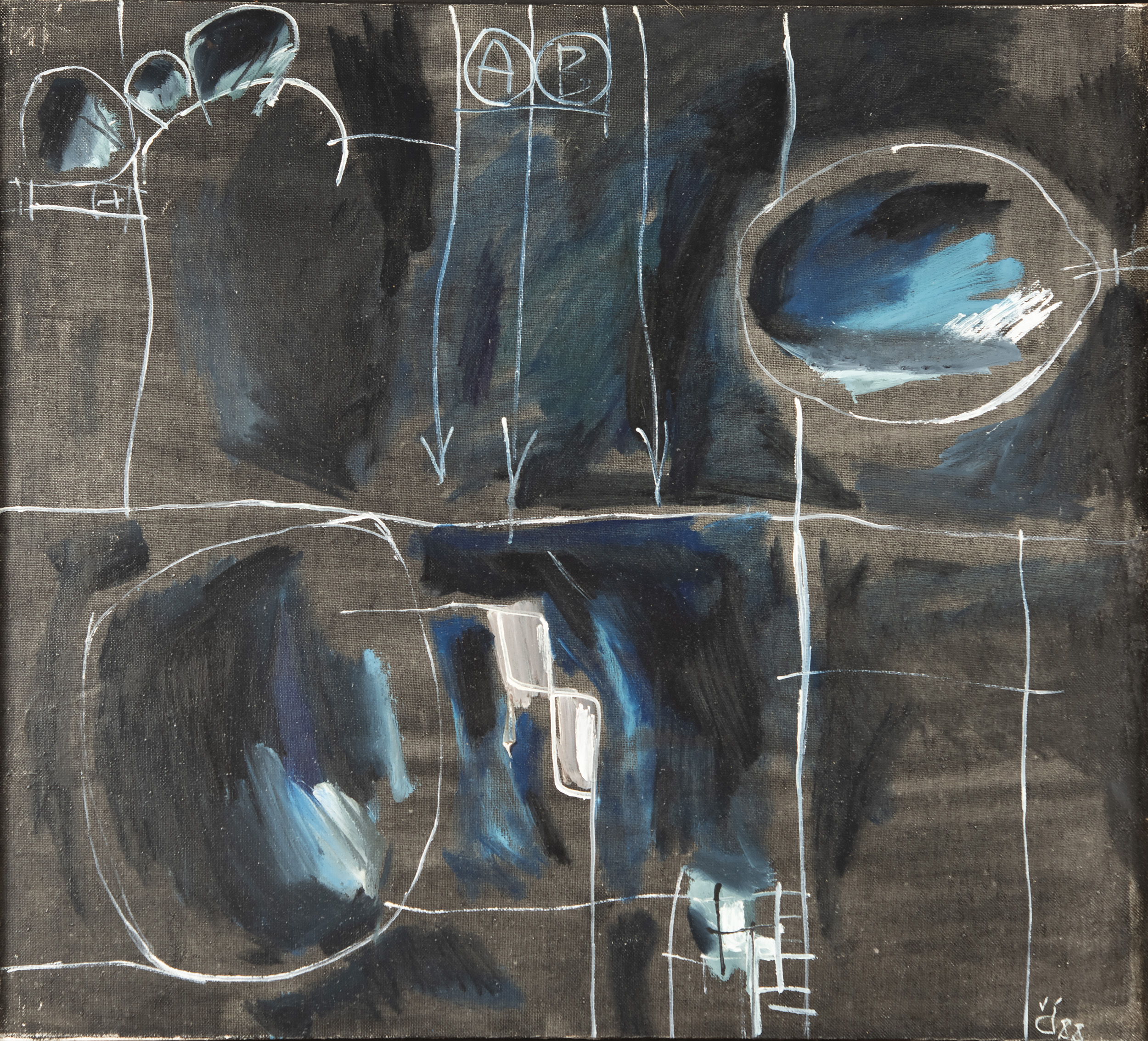
Composition with Black and White, 1988. Oil on canvas, 89 × 99 cm (35 1/16 × 39 in.). Norton and Nancy Dodge Collection of Nonconformist Art from the Soviet Union. D07837
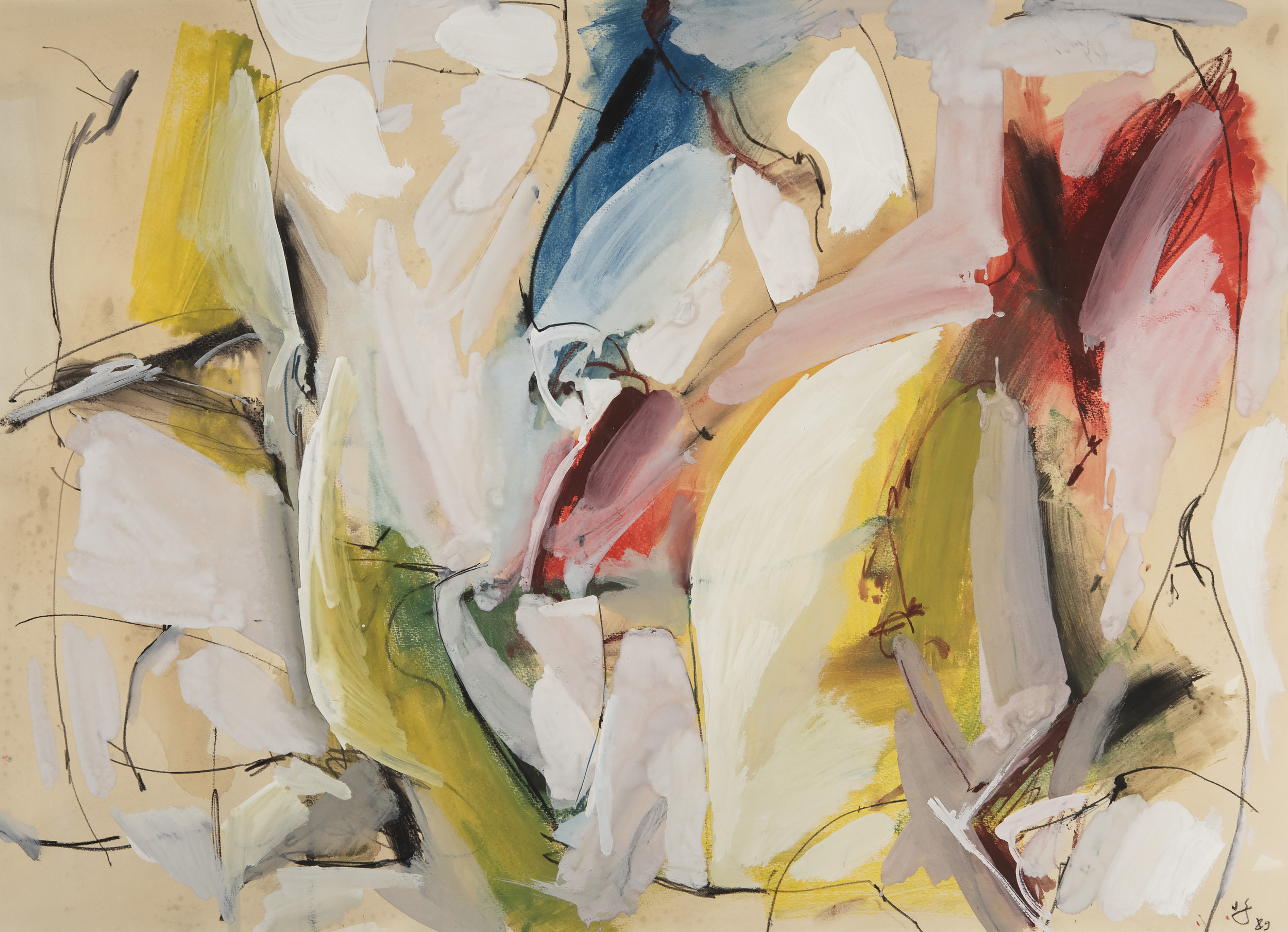
Untitled, 1989. Gouache on paper, 71.3 × 99.2 cm (28 1/16 × 39 1/16 in.). Norton and Nancy Dodge Collection of Nonconformist Art from the Soviet Union. D07863

Untranslated, 1989. Gouache on paper, 102.7 × 73.2 cm (40 7/16 × 28 13/16 in.). Norton and Nancy Dodge Collection of Nonconformist Art from the Soviet Union. D07989

Untitled, 1989. Gouache on paper, 73.4 × 102.3 cm (28 7/8 × 40 1/4 in.). Norton and Nancy Dodge Collection of Nonconformist Art from the Soviet Union. D07990
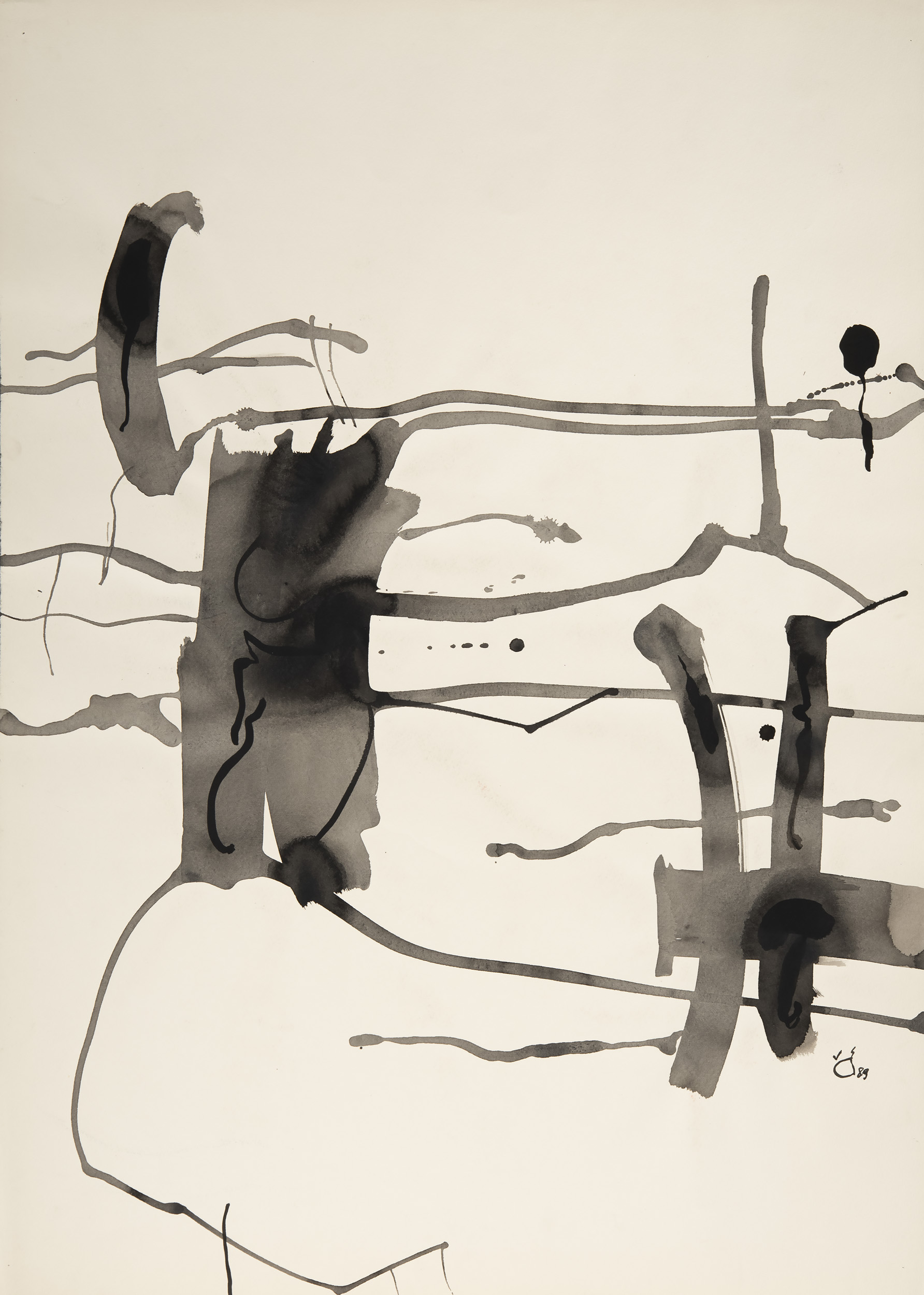
Untitled, 1989. Watercolor on paper, 102.3 × 73.5 cm (40 1/4 × 28 15/16 in.). Norton and Nancy Dodge Collection of Nonconformist Art from the Soviet Union. D03090