

Aleksandras Macijauskas
1938 — Kaunas (Lithuania). Works in Kaunas (Lithuania)
A founding member and celebrated artist of the Lithuanian School of Photography, Aleksandras Macijauskas is recognized as a champion of psychological portraiture and psychological documentary during the second half of the twentieth century. He is also a founder of the seminal Kaunas Photography Club, established in 1963, and the official Lithuanian Society of Art Photography, established in 1969 (now the Lithuanian Photographers Association). Along with his fellow artists, including Romualdas Rakauskas (1941–2021) and Antanas Sutkus (b. 1939), Macijauskas popularized the Lithuanian school of photography throughout the Soviet Union and abroad.
Formal photography education did not exist in Lithuania until the mid-1990s; thus, all the famous Lithuanian photographers, including Macijauskas, were self-taught and were mostly employed as photojournalists for various state-published periodicals—in Macijauskas’s case, at the Kaunas office of Vakarinės naujienos [Evening News]. Meanwhile, they managed to circulate their more creative output in art and culture publications such as Nemunas magazine. In addition, Macijauskas served as executive secretary of the Lithuanian Society of Art Photography in 1973 and as chairman of the Society’s Kaunas branch from 1978 to 2009.
Macijauskas’s personal experiences of the unpolished, rough sides of rural and urban living in Lithuania during the Soviet era lends a dramatic, tense, and grotesque character to his depictions of real-life scenes stuck between the past and the present, the traditional and the modern. These images evoke the never-ending circle of life with all its conflicts, cruelties, and absurdity, yet they retain space for hope, thanks to the persisting faith in the kindness of human nature that can be experienced beneath the phantasmagoric fragments of reality. Macijauskas’s best-known series—Demonstracijos [Demonstrations] (1965–85), Kaimo turguose [Lithuanian Rural Markets] (1968–87, MO Museum collection, Vilnius, Lithuania), Vasara [Summer] (1974–84), and Veterinarijos klinikose [In the Veterinary Clinic] (1977–84, MO Museum collection and the Metropolitan Museum of Art, New York)—feature expressive, distorted, and skewed compositions with sharp, contrasting lighting that occasionally recall early twentieth-century German expressionist cinema or the Netherlandish painter Hieronymus Bosch (c. 1450–1516). In Macijauskas’s work, humans and animals find themselves in uncomfortable, often tortured poses, as if they are out of joint and out of place.
This sense of an apocalyptic unease—no wonder one of Macijauskas’s albums is titled Paskutinė knyga [The Last Book] (2007)—makes the artist’s work stand out in the otherwise serene and optimistic landscape of Lithuanian humanist photography from this period. Although Macijauskas was never openly dissident or visually radical like his younger contemporary Rimaldas Vikšraitis (b. 1954), who photographed raw and lewd scenes of daily life in the seemingly degenerate and impoverished Lithuanian countryside, nonetheless his works are obviously not in perfect harmony with the simplified propaganda vision of life in the Soviet Union. While the grotesque, theatrical dramatism of Macijauskas’s portrayals of chaotic social encounters may be an aesthetic device, there is an allusion to the social and cultural entropy of Lithuanian society cut off from its traditions and ways of life by the imposed ideological regime. Unlike many of his poetic-leaning peers, Macijauskas often lays bare the theater of the absurd that underlies the engineered social order.
Yet, hidden deep inside each of the photographer’s signature images is a warmth because these are his people, who come from the same simple and poor rural background as he does—all imperfect, uncouth, with deeply ingrained national complexes and chained by the Soviet regime. Hence, glimpses of joy and the will to live can be spotted among the hardships and worries permeating Macijauskas’s photographs. While it is difficult to imagine during this period from the late 1960s to the early 1980s that he could have envisioned Lithuania’s eventual liberation from Soviet ideology, in retrospect the photographic series that brought him international fame seem imbued with a profound belief that things can ultimately be fixed and that human vices and virtues can be reconciled. Macijauskas’s rebellious nature and unsightly visual aesthetic could be a cover for a concealed hope.
At a time when contemporary photography and its various permutations offer much more radical visual approaches and subject matter, Macijauskas’s ungroomed depictions of life under Soviet occupation seem almost innocent today. Yet these images serve as a solid and capacious document of the psychological and moral complexity of the human being in tumultuous times and reflect the artist’s own difficult experiences of losing close relatives, seeing the Soviet regime’s repressions on his family (the photographer’s mother was exiled for several years to the Komi Republic in northwestern Russia for alleged ties with the anti-Soviet freedom fighters), getting mixed up in the activities of a local street gang, and short-term incarceration for petty hooliganism. In turn, his personal details exemplify the typical life stories of the people in the Eastern European region during the middle to second half of the devastating twentieth century, whose presence can be sensed in Macijauskas’s photography.
Macijauskas’s predilection for working in series stands in opposition to humanist photographer Henri Cartier-Bresson’s famous maxim of “the decisive moment” in social portraiture, which was eagerly adopted by many Lithuanian photographers who sought to produce spectacular and psychologically profound portrayals of their compatriots. It is as if Macijauskas suggests that no single portrait can fully reveal the contradictions in human nature, and it is only possible to comprehend this enigma by consistently looking at people in their most varied expressions and manifestations, from the banal to the tragic. Even the estranged documentary visual approach typical of Demonstrations, Lithuanian Rural Markets, and In the Veterinary Clinic fails to exhaust the diversity of Macijauskas’s work. Infinitely curious, the artist has tried his hand at almost every photographic genre, from the nude to photomontage, even if these segments of his oeuvre are not as well known.
Macijauskas has participated in numerous exhibitions in Lithuania and worldwide, receiving major awards for his oeuvre as a whole, including the Balys Buračas Photographic Art Prize (2006) in the field of ethnographic photography in Lithuania; the Lithuanian National Prize for Culture and Art (1995), which is the state’s highest art award; and the Golden Cross of Merit of the Republic of Poland (2006). He joined the Fédération Internationale de l’Art Photographique (FIAP) in 1976 and became an honorary member in 1994, and he became an honorary member of the Lithuanian Photographers Association in 1997.
Jurij Dobriakov
Photo portrait: 2016, Tomas Pabedinskas, courtesy Tomas Pabedinskas

Demonstration - 20, 1967. Gelatin silver print on paper, 28.4 × 37.1 cm (11 3/16 × 14 5/8 in.). Norton and Nancy Dodge Collection of Nonconformist Art from the Soviet Union. 2000.1112
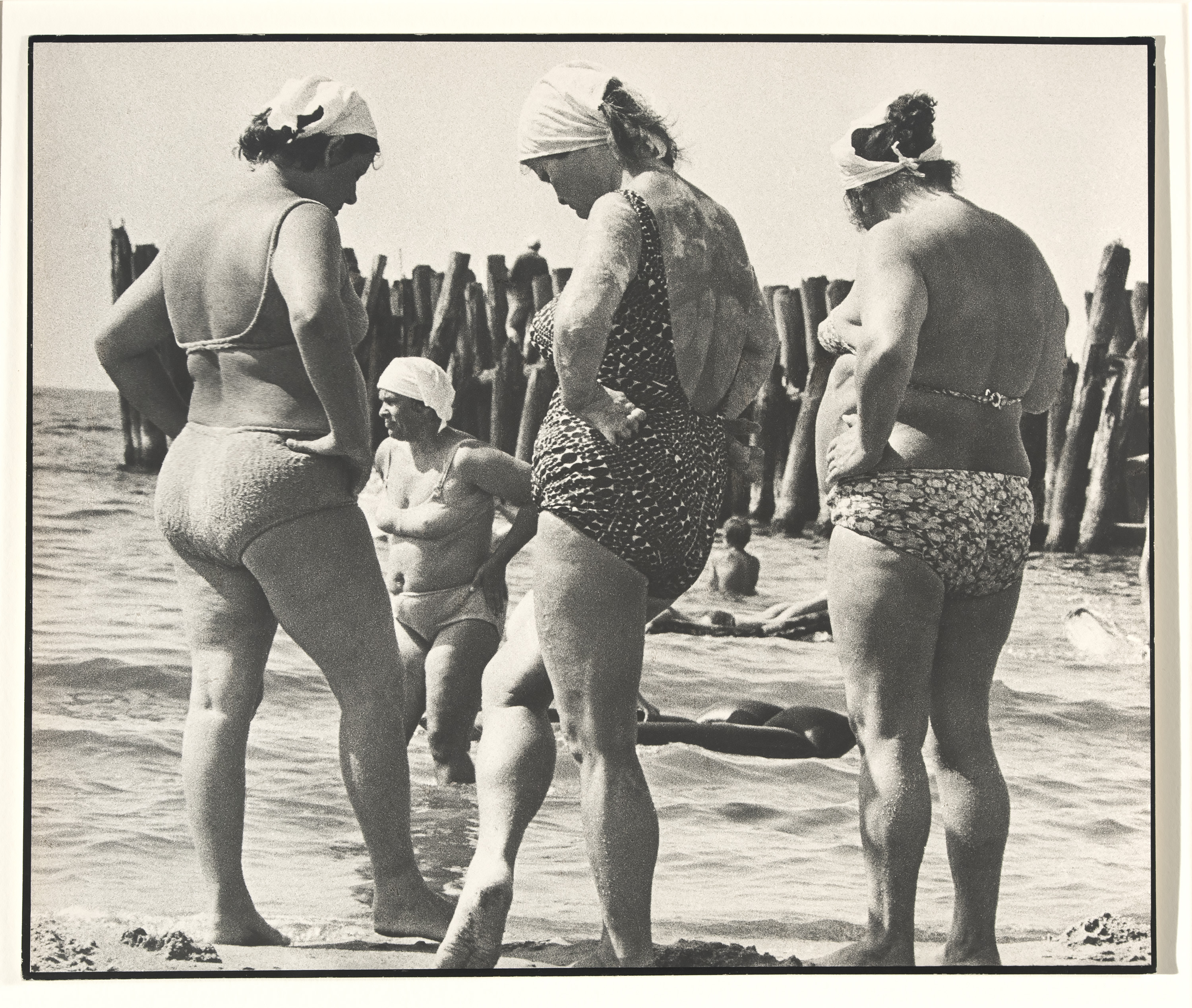
No. 9 from the series Summer, 1981. Gelatin silver print on paper, 28.5 x 34.4 cm (11 1/4 x 13 9/16 in.). Norton and Nancy Dodge Collection of Nonconformist Art from the Soviet Union. 2000.1109
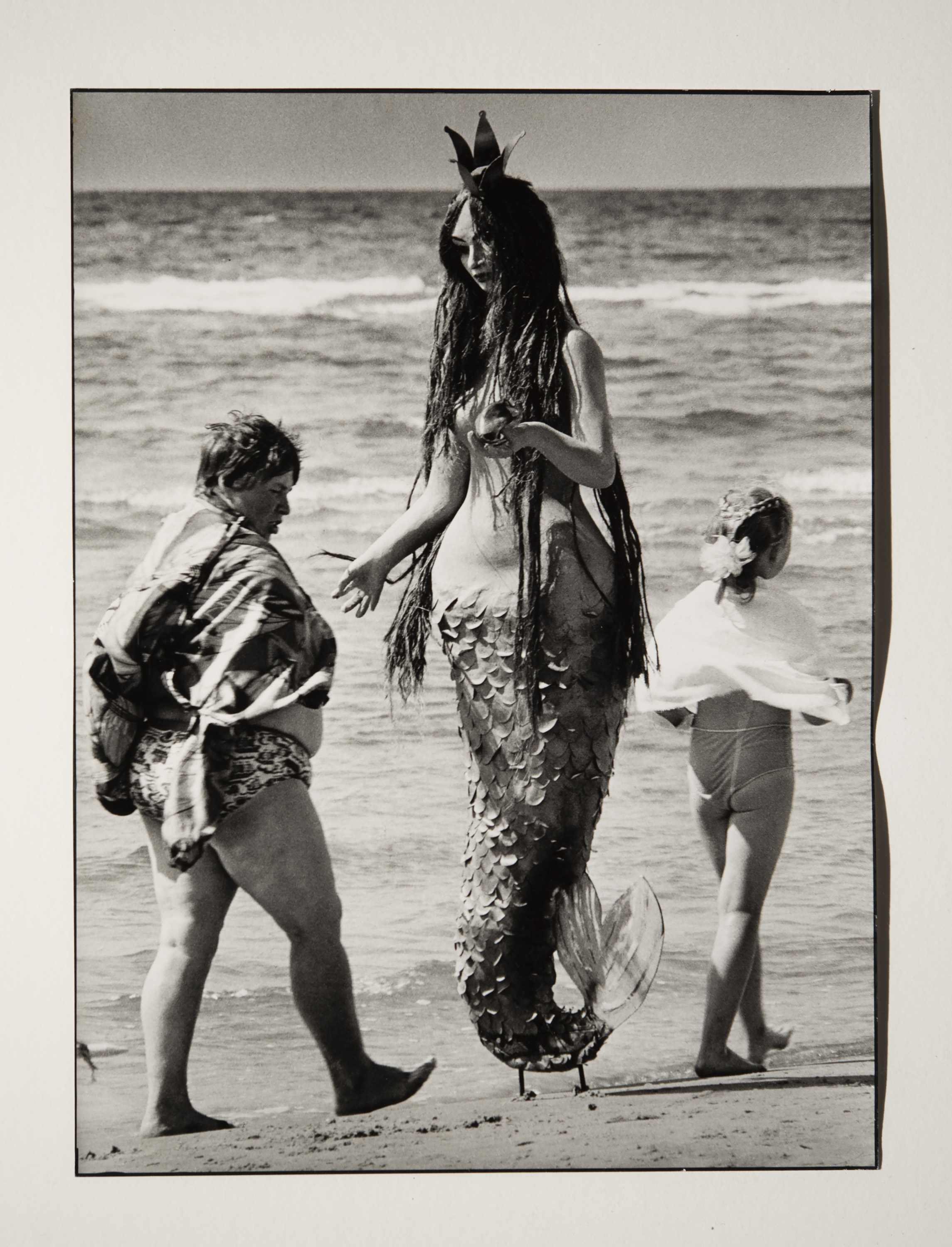
No. 36 from the series Summer, 1981-1982. Gelatin silver print on paper, 39 × 28.9 cm (15 3/8 × 11 3/8 in.). Norton and Nancy Dodge Collection of Nonconformist Art from the Soviet Union. 2000.1108
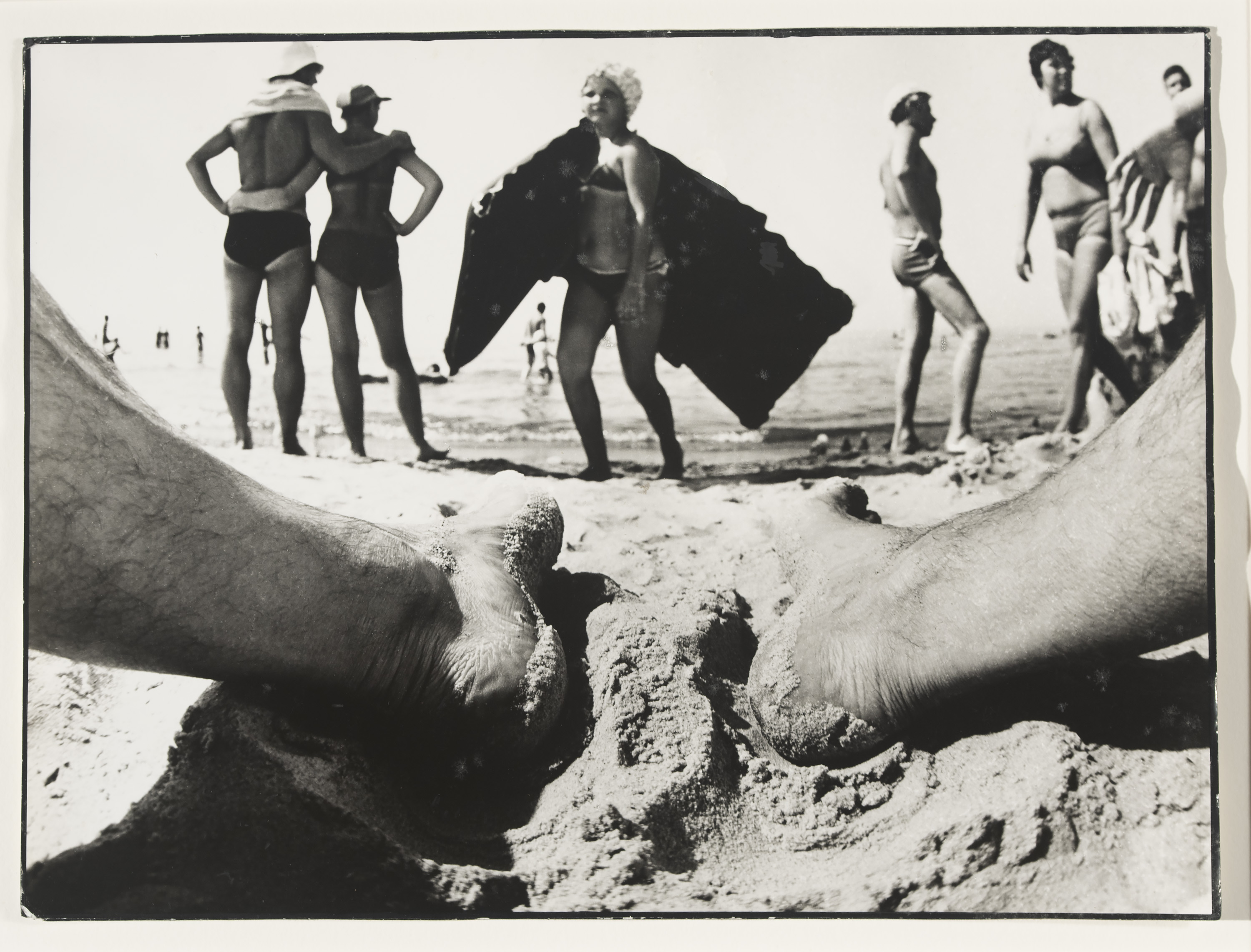
No. 24 from the series Summer, 1982. Gelatin silver print on paper, 29 × 39 cm (11 7/16 × 15 3/8 in.). Norton and Nancy Dodge Collection of Nonconformist Art from the Soviet Union. 2000.1107

Untitled, 1969. Gelatin silver print on paper, 39.4 × 27.8 cm (15 1/2 × 10 15/16 in.). Norton and Nancy Dodge Collection of Nonconformist Art from the Soviet Union. 2000.1105
Selected Exhibitions
1969 9 литовских фотографов [9 Lithuanian Photographers], Central House of Journalists, Moscow, USSR
1970 Bibliothèque nationale de France, Paris, France
1977 Lithuanian Village Markets, Musée Réattu, Arles, France
1979 Contemporary European Photography: John Batho, Aleksandras Macijauskas, Michel Szulc-Krzyzanowsky, Venice, Italy
1979 Images des hommes. 18 photographes européens [Images of Men: 18 European Photographers], Galerie et Fils, Brussels, Belgium
1980 Lithuanian Photography, Photographers’ Gallery, London, England
1986 Photography: A Facet of Modernism, San Francisco Museum of Modern Art, San Francisco, USA
2001 The Avant-Garde Document: Photographs by Alexandras Macijauskas, Museum of New Mexico, Museum of Fine Arts, Santa Fe, USA
2004 Beyond Memory: Photography and Photo-Related Works of Art from the Norton and Nancy Dodge Collection of Nonconformist Art from the Soviet Union, Jane Voorhees Zimmerli Art Museum, New Brunswick, New Jersey, USA
2010 Fotografie aus Litauen [Photography from Lithuania], Fotoforum West, Innsbruck, Austria
Selected Publications
Aleksandras Macijauskas: Gyventi / To Live. Kaunas: Kaunas Art Fund, 1997.
Aleksandras Macijauskas: Ratas, fotografijų rinktinė 3 / The Wheel, Selected Photographs 3. Vilnius: Lithuanian Photographers Association, 2010.
Aleksandras Macijauskas: Rinktinė / Selected Photographs. Vilnius: Vaga, 2003.
Aleksandras Macijauskas: Paskutinė knyga, fotografijų rinktinė 2 / The Last Book: Selected Photographs 2. Vilnius: Lithuanian Photographers Association, 2007.
Česonis, Gintaras, ed. Aleksandras Macijauskas. Lietuvos kaimo turguose, 1968–1980 [Aleksandras Macijauskas: Lithuanian Rural Markets, 1968–1980]. Kaunas: Kaunas Photography Gallery, 2018.
Mrazkova, Daniela, and Vladimir Remes, eds. Aleksandras Macijauskas. My Lithuania. London: Thames and Hudson, 1991.
Yates, Steve, ed. The Avant-Garde Document: Photographs by Aleksandras Macijauskas. Santa Fe: Museum of New Mexico, Museum of Fine Arts, 2001.
See also