
Ada Rybachuk
1931 — Kyiv (Ukraine) | 2010 — Kyiv (Ukraine). Worked in Kyiv (Ukraine) and the Siberian Far North (USSR, now Russia) (1954–56, 1957–59, 1962)
Ada Rybachuk was a Ukrainian artist, member of the Union of Artists of the Ukrainian SSR, and honorary member of the Union of Cinematographers of Ukraine. She was a painter, printmaker, illustrator, sculptor, writer, and monumentalist artist. She worked in a range of artistic categories, including genre scenes, historical, landscape, and portraiture, in addition to projects in book illustration.
As part of a creative partnership in the artist collective ARVM with her husband Volodymyr Melnychenko (1932–2023), Rybachuk created a series of works themed around, and produced with, the indigenous peoples of the Siberian Far North. The collective’s work included monumental designs (paintings and sculptures) for buildings in Kyiv, book projects (from conception to illustration), and printmaking and sculptural series. The artists began signing their joint works with the abbreviation ARVM in the 1980s.
Ada Rybachuk’s own works are marked by the influences of folk art, expressionism, realism, and symbolism. One of the key directions of her work was the creation of a visual language capable of conveying ideas and emotions that resonate with global problems of humanity: war, memory, the fragility of human life, and the struggle for freedom.
Rybachuk was born into the family of a career officer who served in the Soviet Army during the Second World War when the family was evacuated to Kazakhstan. After returning to Kyiv, Rybachuk graduated with a gold medal from the Taras Shevchenko State Art High School, which is where she met Melnychenko. In 1951 she enrolled at the Kyiv State Art Institute and studied in the studio of Professor Oleksii Shovkunenko (1884–1974) until graduation in 1957. After a student exhibition of sketches from her fieldwork in Vylkove, Odesa region, Rybachuk received a commission from the Molod publishing house for her first independent work, illustrating Dmytro Mamin-Sybiriak’s book Оленчині казки [Olenchyni kazky, Olena’s Fairy Tales] (1953).
While still a student, Ada Rybachuk made her first trip to the Siberian Far North in 1954, to the shores of the White Sea and the island of Kolguyev, followed by a second trip the next year, which lasted a year and a half. During the expedition, Rybachuk worked on her thesis with collaborator Melnychenko. She defended the project in 1957 in Kyiv, and the pair presented sketches and a series of engravings created in 1955–56 in the Far North, alongside two large-scale paintings, Випробування [Vyprobuvannia, The Trial] and Зупинка на обід [Zupynka na obid, Lunch Break] (no longer extant).
In 1957, Rybachuk’s painting Юнга [Yunga, Cabin Boy] (location unknown) was awarded a silver medal at the Sixth World Festival of Youth and Students in Moscow. That same year, she joined the Union of Artists of the USSR, and three years later, the Union of Artists of the Ukrainian SSR.
Rybachuk and Melnychenko’s third trip to the Far North ran from 1957 to 1959. During it Rybachuk produced three works on canvas, titled Закохані [Zakokhani, Lovers], Кінець безмовності [Kinets bezmovnosti, The End of Silence], and Мисливська пісня [Myslyvska pisnia, Hunting Song], as well as created monotypes and woodcuts. At the end of the expedition, the pair donated 118 of their works to the city of Naryan-Mar, marking the thirtieth anniversary of the founding of the capital of the Nenets Autonomous Okrug (district) of the RSFSR, thus establishing the first art museum in the Arctic.
In her works about the Far North, Ada Rybachuk was inspired not only by the polar landscapes but also by the beliefs and way of life of the local people, the Nenets. It was important for her to talk about the Arctic as an environment with incredible nature and culture, as well as a place affected by Soviet nuclear tests. In the 1950s, Kolguyev Island became one of the locations affected by radiation damage. It is located 200 kilometers (124 miles) from Novaya Zemlya, where a nuclear test site was opened on September 17, 1954, and where the largest land-based nuclear weapons tests in human history took place throughout the 1950s. [1] During Rybachuk and Melnychenko’s second expedition to Kolguyev in 1955–56, thirty-six atmospheric nuclear explosions were carried out on Novaya Zemlya, which led to the destruction of entire animal populations and changes to the entire natural environment. It became virtually impossible to preserve the local culture in its original form or to return to the ways of life enjoyed before the nuclear testing. Kolguyev Island was also affected: Animals began to die out, the ecosystem began to collapse, and people fell ill. [2]
One of Rybachuk’s graphic series, Хіросіма. Ядерна трагедія [Khirosima. Yaderna trahediia, Hiroshima: Nuclear Tragedy] (1960–61, ZAM, D21134, D21135, D21136, D21138, D21141), personalized the catastrophe through images of human faces. Most of the works’ subjects have their eyes closed in mourning and contemplation. The prints were the artist’s statement on the nuclear bombing of Japanese cities during World War II, but they arose from her attempt to comprehend the tragedy of the indigenous peoples of the Soviet North. The rough forms and dynamic lines convey the tension and horror of the bomb’s destructive impact. The texture of the wood creates a surface, a “skin” for the faces, and the human dissolves into nature, emphasizing the defenselessness of all living things in the face of tragedy. Ada Rybachuk wasn’t just documenting a historical event but was also encouraging the viewer to reflect on the price of progress and humanity’s responsibility for the use of technology.
The 1960s and 1970s were a period of intense work for ARVM in the field of monumental art. They created the design of the Kyiv bus station (1960, First All-Union Prize for Young Architects for Interiors), developed the decorative design of the Republican Palace of Pioneers (now the Palace of Children and Youth) in Kyiv (1963–68; the interior mosaics were Діти світу [Dity svitu, Children of the World], Знамена [Znamena, Banners], Город [Horod, City], Чарівна скрипочка [Charivna skrypochka, The Magical Violin], and in the pool at front of the palace was Сонце, зорі та сузіря [Sontse, zori ta suziria, Sun, Stars, and Constellations]. They also worked on the architectural and plastic design of the Memorial and Ritual Complex Парк Памяті [Park Pamiati, Park of Memory] at the Baikove Cemetery in Kyiv (1968–81, destroyed in 1982), as well as working on other projects.
At the same time, Rybachuk continued her trips to the Far North and her collaboration with the inhabitants of Kolguyev Island. Together with Melnychenko and the children of the island, Rybachuk worked on the creation of Велика картина про наш острів [Velyka kartyna pro nash ostriv, The Great Picture of Our Island] (1962). She began to write stories inspired by her stay on the island, and Новорічне оповідання [Novorichne opovidannia, A New Year’s Story] was published in the magazine Дружба народів [Druzhba narodiv, Friendship of peoples] (1964), while the books Запахи землі [Zapakhy zemli, Smells of the Earth] and Остров Колгуев [Ostrov Kolguiev, Kolguev Island] (1967, text by Rybachuk, illustrations by Rybachuk and Melnychenko) were published by the Moscow publishing houses Detskaya Literatura and Molodaia Gvardiia.
After Rybachuk worked with Melnychenko for more than ten years on the Стіна Пам’яті [Stina Pamiati, The Wall of Remembrance] at the Baikove Cemetery, it was covered with concrete by local authorities. After this loss, Rybachuk, as part of ARVM, worked on socially important themes in smaller forms unrelated to architecture, such as the series of ceramic sculptures Бронзові образи [Bronzovi obrazy, Bronze Images] (1982–2000), Крик птаха [Kryk ptakha, The Cry of a Bird] (1982), the series of lithographs entitled Пам’ять [Pamiat, Memory], and Зупинити ядерну загрозу [Zupynyty yadernu zahrozu, Stop the Nuclear Threat] (1985–86), and the book and textile (three tapestries) project Коли руйнується світ [Koly ruinuietsia svit, When the World Is Destroyed] (1991), dedicated to the memory of the victims of Babyn Yar.
The series of lithographs in Memory (1985–86) brings together prints of different styles; in Warning (1985, ZAM, D21132) the artists use collage, whereas the other compositions are more static, similar to a poster. However, in the work Dedication to Women of World War II (1986, ZAM, D21133) the style is closer to that of The Wall of Remembrance. This lithograph reflects the monumental work with its sharp contrasts of light and shadow, reminiscent of more sculptural volume. It also stands out for the expressionistic treatment of the face and how the principle of montage is applied to the image, in which we see a large half-figure in the center surrounded by more detailed, narrative scenes.
The series of large ceramic sculptures Bronze Images (1982–2000) became a significant achievement of ARVM in its later period, and it was Ada Rybachuk’s final monumental series. The sculptures are large heads (often more than one meter, or three feet, high), based on sketches made during trips to the Far North. According to the artists’ plan, the polychrome sculptures made of chamotte were to be cast in bronze and installed in the Nenets Region, specifically on the island of Kolguyev. The first in the series was the work В очікуванні Сонця [V ochikuvanni Sontsia, Waiting for the Sun], which consisted of a female figure in traditional national costume in a two-sided sculpture with Nenets ornamental symbols. The other “heads” are also symbolic, representing sculptural portraits of familiar island residents and revealing various aspects of traditional Nenets life (all from 1982–90): Вітер з моря [Viter z moria, Wind from the Sea], Земля [Zemlia, Earth], Північне Сяйво – Плин часу [Pivnichne Siaivo – Plyn chasu, Northern Lights—Flow of Time], Морський горизонт [Morskyi horyzont, Sea Horizon], Острів Нова Земля [Ostriv Nova Zemlia, Novaya Zemlya Island], and Waiting for the Sun. This series, which serves to preserve the memory of this island’s untainted past, is based on local mythology, ornaments, sacred animals, and the generalized images of specific people whose depiction suggests the realm of myth and tradition.
In 1990, Ada Rybachuk wrote the screenplay for the film The Cry of a Bird, which was shot at the Ukrainian Studio of Chronicle and Documentary Films by director Israel Goldstein.
Ada Rybachuk passed away in 2010 in Kyiv.
Oksana Barshynova
Translated from Ukrainian by Nathan Jeffers
Notes:
1. Nuclear Threat Initiative, “Central Test Site of Russia on Novaya Zemlya,” Nuclear Threat Initiative.
2. Hibakusha Worldwide, “Novaya Zemlya, Russia. Nuclear Weapons Testing Site,” Hibakusha Worldwide.
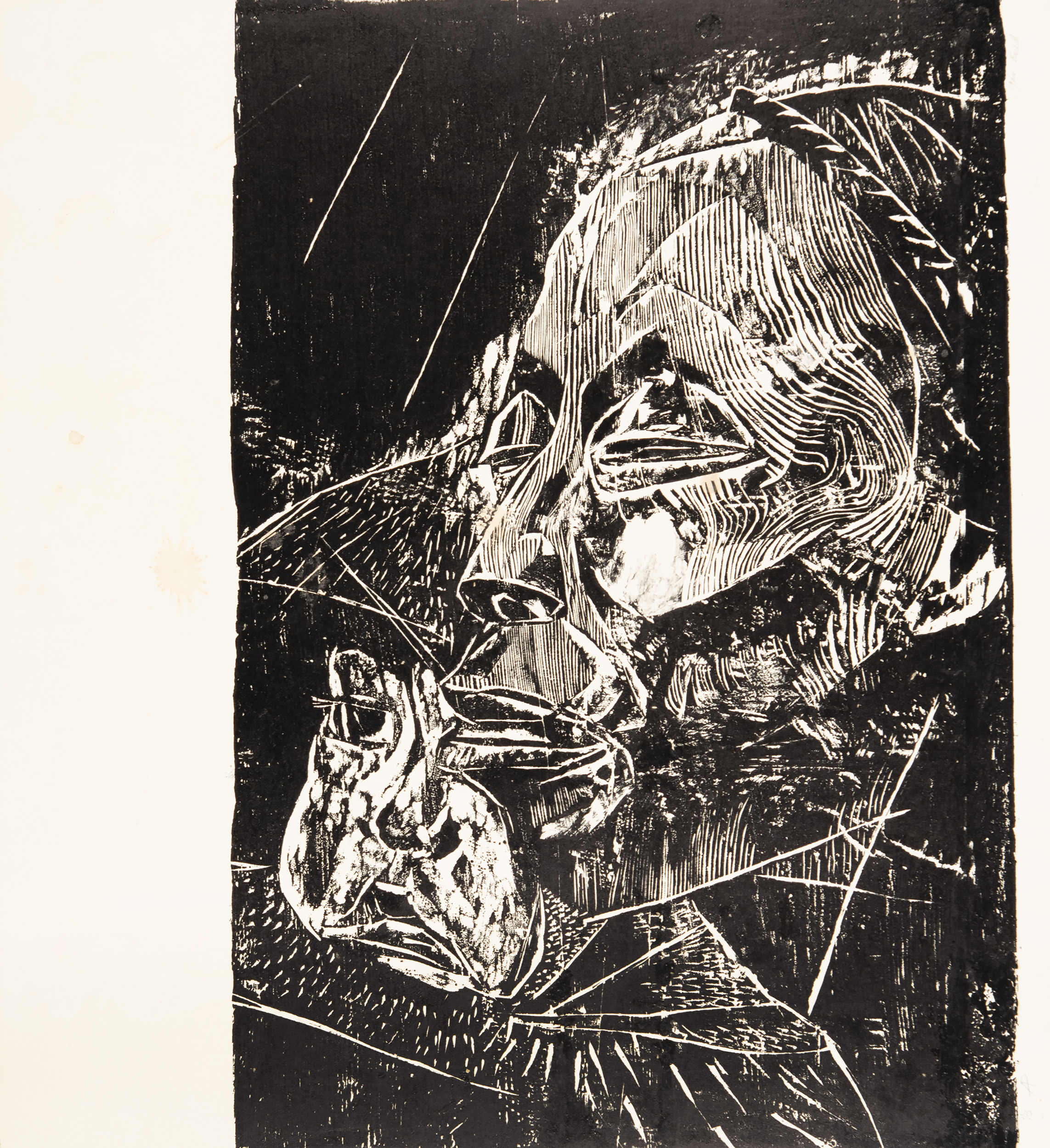
The Mother from the series Nuclear Tragedy, 1960. Woodcut on paper, 52 x 35.5 cm (20 1/2 x 14 in.). Norton and Nancy Dodge Collection of Nonconformist Art from the Soviet Union. D21141
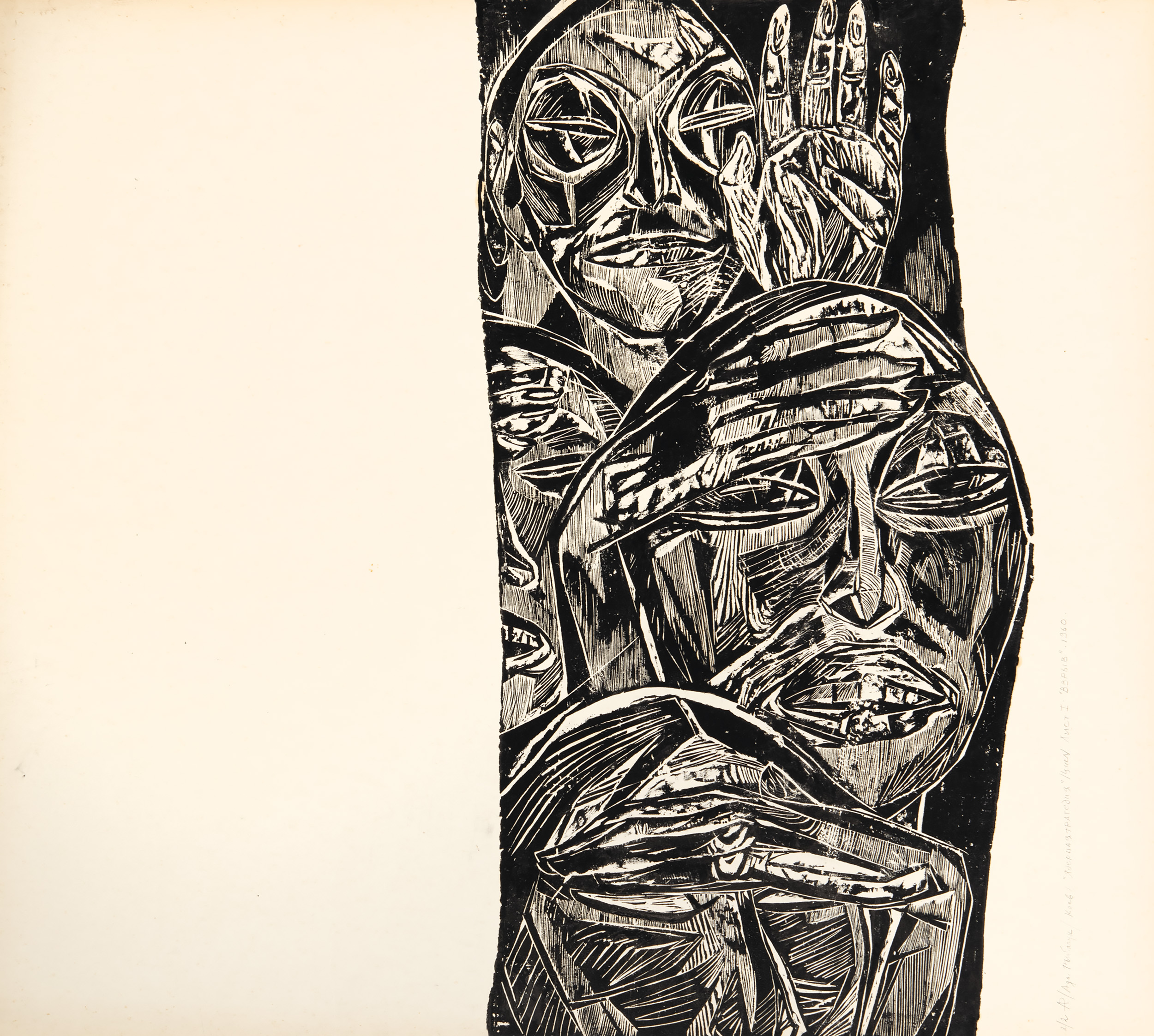
Explosion from the series Nuclear Tragedy, 1960. Woodcut on illustration board, 61.8 × 69.9 cm (24 5/16 × 27 1/2 in.). Norton and Nancy Dodge Collection of Nonconformist Art from the Soviet Union. D21138
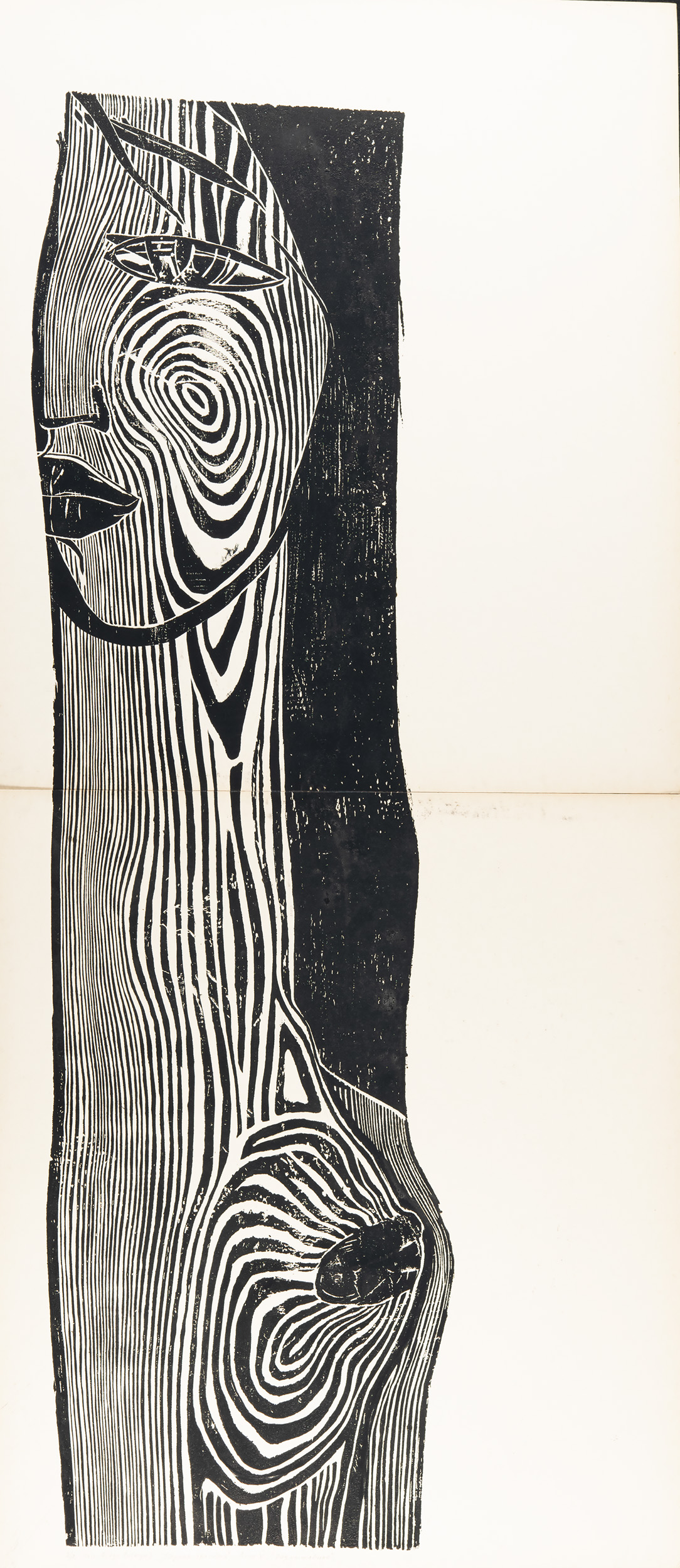
Meditation from the series Nuclear Tragedy, 1961. Woodcut on illustration board, 140 × 62.1 cm (55 1/8 × 24 7/16 in.). Norton and Nancy Dodge Collection of Nonconformist Art from the Soviet Union. D21136
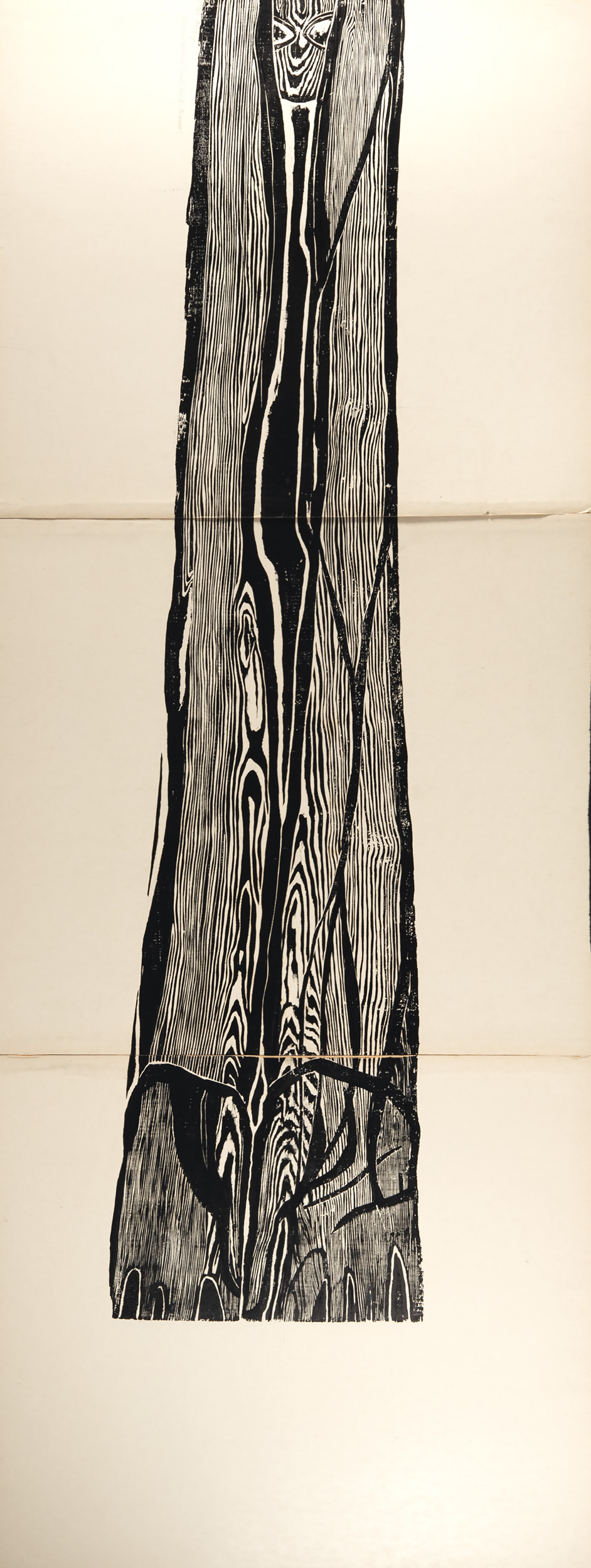
Despair from the series Nuclear Tragedy, 1961. Woodcut on illustration board, 184 × 70 cm (72 7/16 × 27 9/16 in.). Norton and Nancy Dodge Collection of Nonconformist Art from the Soviet Union. D21135
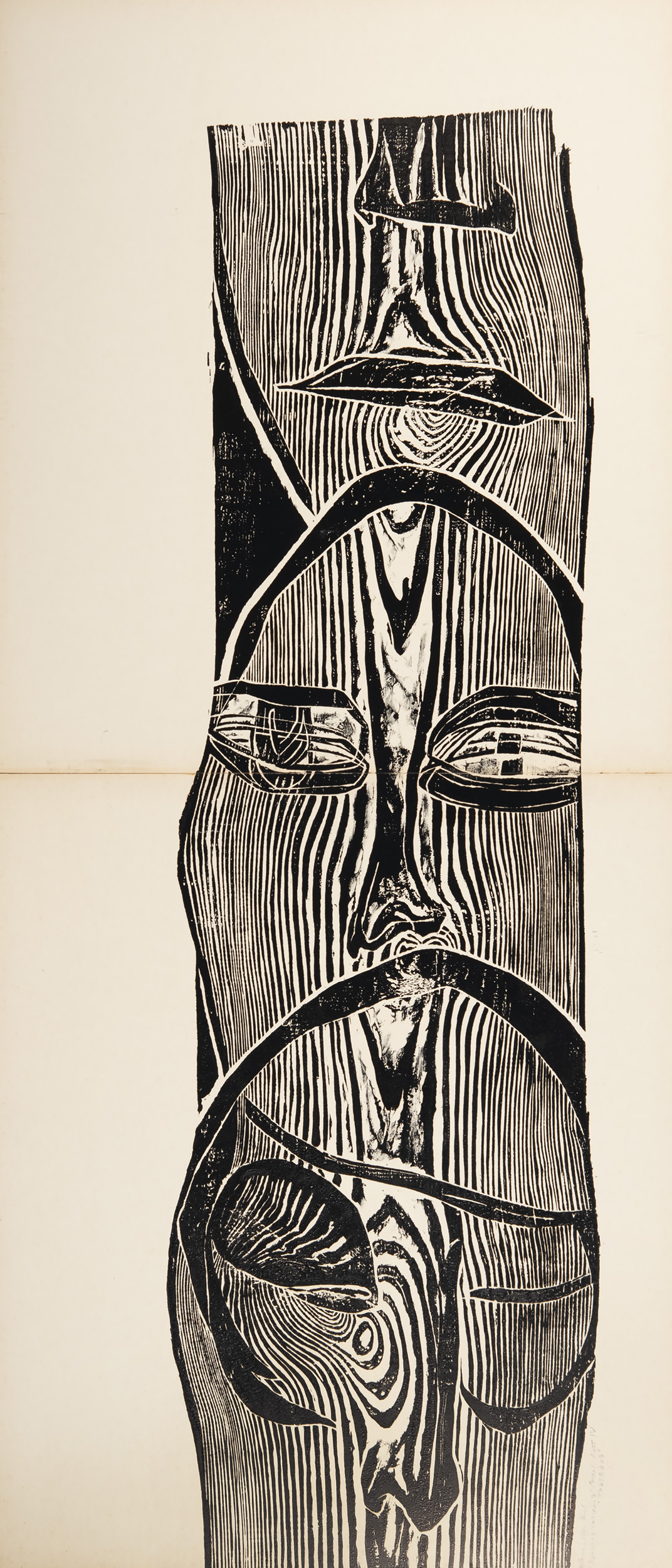
Tragedy from the series Nuclear Tragedy, 1961. Woodcut on illustration board, 140 × 62 cm (55 1/8 × 24 7/16 in.). Norton and Nancy Dodge Collection of Nonconformist Art from the Soviet Union. D21134